
10 Air Conditioning Tips For Hurricane Season
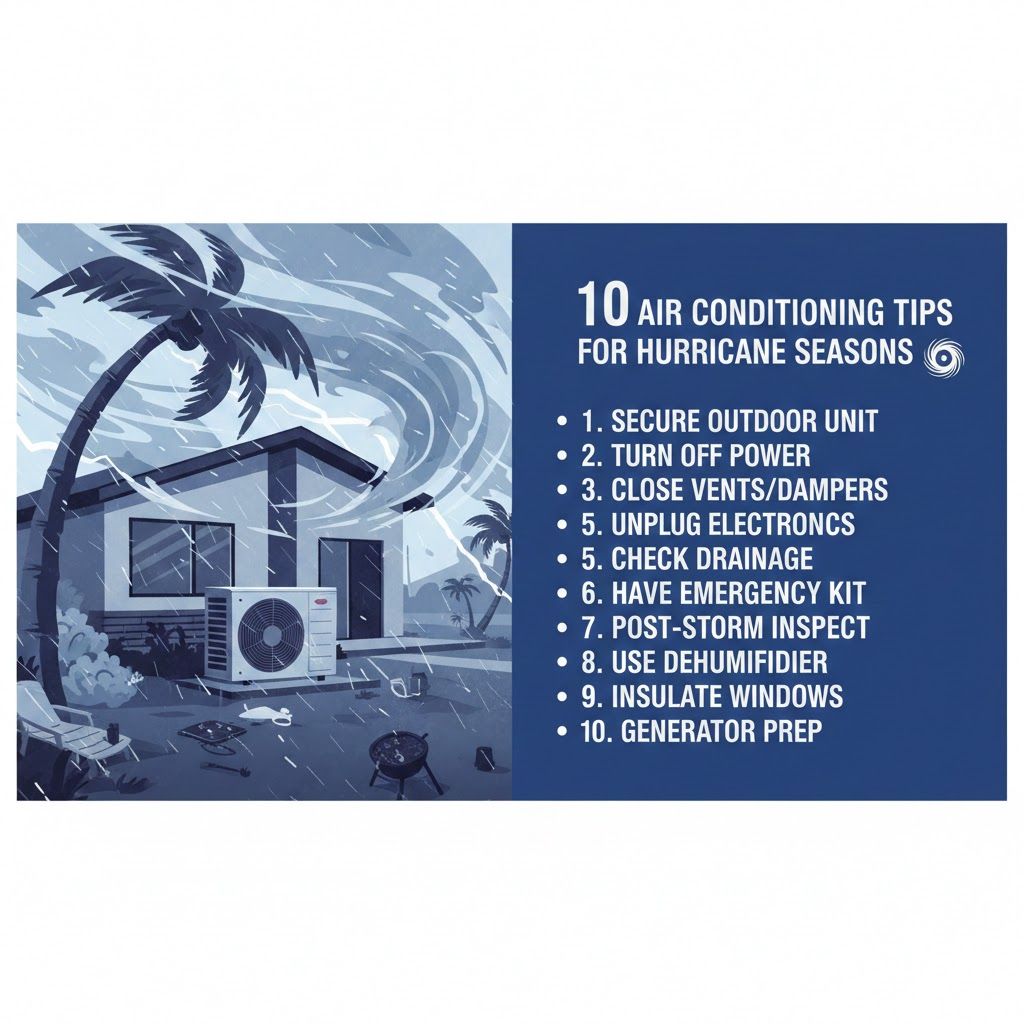
Preparing your air conditioner before a hurricane can prevent costly damage, protect your home, and help you stay comfortable in the storm’s aftermath. Below are 10 essential AC tips for hurricane‑prone areas like South Florida.
1. Secure the outdoor unit
Your outdoor condenser is highly exposed to high winds and flying debris during hurricanes. Anchoring it with hurricane straps or bolting it to a concrete pad helps prevent it from tipping over or shifting, which can damage refrigerant lines and electrical connections.
Trim nearby trees and remove loose items like patio furniture or tools that could strike the unit.
Consider adding a sturdy protective cage that allows airflow but shields the coil and fan.
2. Turn off power to the AC
When a hurricane watch turns into a warning, shut your AC down at the thermostat and at the breaker panel. Sudden outages, voltage spikes, and power restoration surges can burn out compressors, capacitors, and control boards.
Label your AC breaker clearly so you can shut it off quickly before the storm.
Leave the system off until you have inspected it or had an HVAC technician verify that it is safe to restart.
3. Close vents and dampers
Closing supply vents and dampers in unused rooms can reduce the infiltration of hot, humid air and debris if windows break or doors are damaged. This protects ductwork from moisture and helps the system dehumidify more effectively after the storm.
Close fireplace dampers and any fresh‑air intake vents that could draw in wind‑driven rain.
After the storm, reopen vents and dampers slowly as indoor conditions stabilize to restore balanced airflow.
4. Unplug electronics and sensitive devices
Beyond turning off the AC, unplug thermostats, smart home hubs, mini‑splits, window units, and other HVAC‑related electronics if possible. Even if the main breaker trips, stray surges can still travel through wiring and damage circuit boards.
Use high‑quality surge protectors or a whole‑home surge protection system to add an extra layer of defense.
Keep Wi‑Fi thermostats and control panels disconnected until power is steady and reliable again.
5. Check AC drainage and condensate lines
Clogged condensate lines can cause water to back up into your air handler, increasing the risk of leaks and ceiling damage during heavy rainfall. Ensuring clear drainage before hurricane season helps your AC remove humidity efficiently when you need it most.
Flush the condensate line with a mixture of water and vinegar to clear algae and debris.
Confirm that the drain pan is intact and that any condensate pump is working correctly and draining away from the home.
6. Have an emergency HVAC kit
Keep a small AC emergency kit on hand so you can respond quickly once the storm passes. This does not replace professional service, but it helps you stabilize conditions and prevent further damage.
Include extra air filters, duct tape, plastic sheeting, extension cords rated for outdoor use, and a flashlight with spare batteries.
Add a basic tool set (screwdrivers, pliers, adjustable wrench) so you can secure loose panels or temporarily cover openings.
7. Inspect the system after the storm
Before turning your AC back on, perform a careful visual inspection of both indoor and outdoor components. Look for bent fan blades, damaged wiring, standing water, or debris lodged in the unit.
If the unit was submerged or visibly damaged, do not operate it—contact a licensed HVAC technician immediately to avoid fire and shock hazards.
Document any damage with photos for insurance claims before cleanup or repairs begin.
8. Use a dehumidifier to control moisture
High humidity is one of the biggest indoor comfort and health issues after a hurricane, especially if power is intermittent. A standalone dehumidifier can help manage moisture until the central AC is safe to operate again.
Place dehumidifiers in the most used areas or in rooms that tend to feel damp or musty.
Empty the condensate bucket frequently or connect a drain hose so it can run continuously when power is available.
9. Insulate and protect windows
Well‑insulated and properly sealed windows reduce heat gain and moisture intrusion when winds pick up. This means your AC will not have to work as hard once power returns, helping it cool your home faster and more efficiently.
Install storm shutters or impact‑resistant windows where possible and use weatherstripping to seal gaps.
Use thermal curtains or reflective shades to block solar heat and keep interior temperatures lower during outages.
10. Prepare your generator for AC use
If you plan to run your air conditioner or smaller cooling units with a generator, plan ahead. Not every generator can handle the startup load of a central AC compressor.
Check the running and starting wattage of your AC and match it to a properly sized generator.
Have a licensed electrician install a transfer switch so you can safely power your HVAC equipment without back‑feeding the grid.
Why AC preparation matters in hurricane season
Storm‑ready air conditioning is about more than comfort—it protects your property, indoor air quality, and even your health in extreme heat. By following these 10 air conditioning tips for hurricane seasons, you can reduce downtime, avoid costly repairs, and keep your home safer and drier when the next big storm heads toward South Florida.