
The Perfect Thermostat Setting To Save Money In Florida Weather
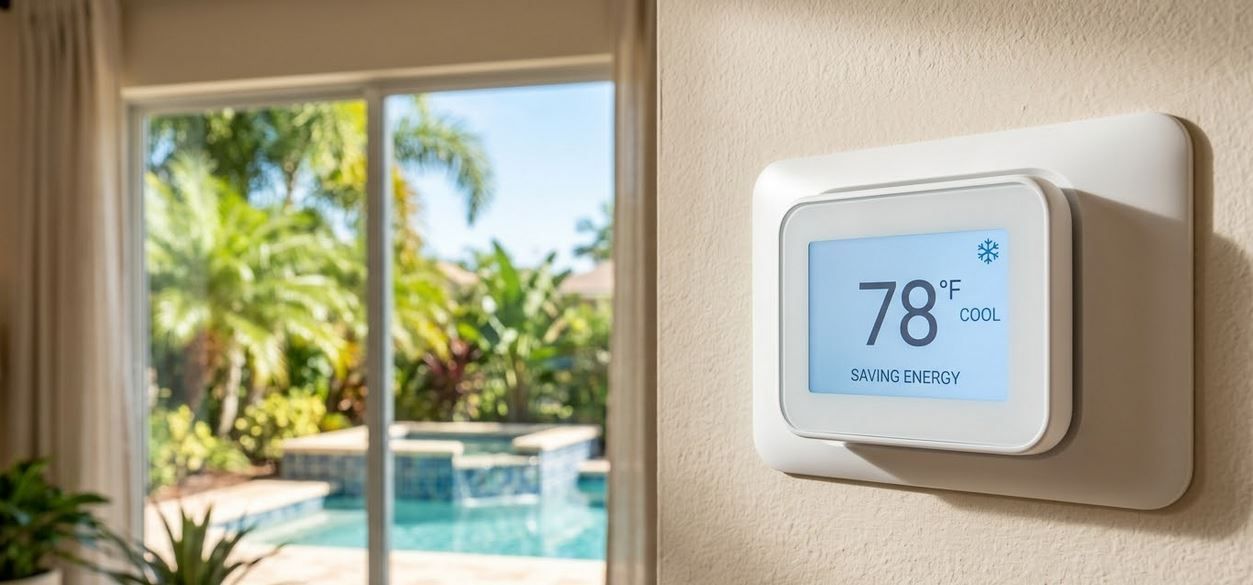
Florida: the Sunshine State. We’re known for beautiful beaches, vibrant theme parks, and... intense heat and humidity. Keeping our homes cool during those scorching summer months can feel like a losing battle against rising energy bills. Our air conditioners become our best friends, working tirelessly to provide relief. But are we using them as efficiently as possible? Is there a magical thermostat number that balances comfort and cost-effectiveness?
The short answer is: yes, there are ideal thermostat settings, but it’s not just about one single number. It's about understanding how your AC works in the Florida climate and making smart adjustments. The goal is to maximize energy efficiency without sacrificing a pleasant living environment. For homeowners in Spring Hill, FL, and across the state, master your thermostat settings is the most effective way to see real savings on your utility bills. This comprehensive guide will walk you through everything you need to know about setting your thermostat perfectly to save money in the unique Florida weather.
Understanding the Florida Challenge
Florida’s climate poses specific challenges for HVAC systems. We don’t just have high temperatures; we have high relative humidity. Your air conditioner’s job is actually twofold: it must cool the air and it must remove moisture. A significant portion of your AC's energy use goes toward dehumidification. If the humidity isn't controlled, you’ll feel uncomfortable, sticky, and hot even at a lower temperature, tempting you to lower the thermostat even further, which just burns more energy. The perfect setting must account for both of these factors.
The Magic Number: When You're Home
According to major energy organizations like ENERGY STAR and the U.S. Department of Energy (DOE), the most efficient setting for your AC when you are home and active is 78°F (26°C).
We know what you might be thinking. "78 degrees?! That’s hot!" For many, this sounds quite warm, especially when it's 95°F with 90% humidity outside. However, with the proper setup and behavioral adjustments, 78°F can be surprisingly comfortable. Here’s why and how:
- The Comfort Variable: It’s crucial to understand that 78°F indoors is not the same as 78°F outdoors. Inside, the air is (hopefully) dehumidified and still.
- The Power of Ceiling Fans: This is the ultimate Florida comfort hack. Ceiling fans don't lower the room's temperature, but they create a wind-chill effect on your skin. The air movement helps sweat evaporate faster, making you feel several degrees cooler. A fan allows you to set your thermostat at 78°F and feel like it’s 72°F or 74°F, for just pennies a day in fan electricity. Just remember: Fans cool people, not rooms. Turn them off when you leave the room.
- The Savings Impact: The DOE estimates that for every degree you raise your thermostat above 72°F, you can save up to 3% to 5% on your cooling costs. Moving from a brisk 72°F to a strategic 78°F can translate to a 20% to 30% reduction in the cooling portion of your energy bill! That's a significant amount, especially over a long Florida summer.
The Set-Back Strategy: When You're Away
There is absolutely no reason to cool an empty house. This is one of the most common ways homeowners waste money. The concept of "set-back" is essential. When you are leaving your home for several hours—whether for work, a day at the beach, or a weekend getaway—you must adjust your thermostat upward.
For moderate daily away periods (like a workday), a good rule of thumb is to set your thermostat about 7-10°F higher than your usual home setting. If your comfortable home setting is 78°F, you should set your thermostat to 85°F to 88°F before you walk out the door.
For extended periods, like a full vacation, it’s even more dramatic. In the heat of a Florida summer, you could even set it to 88°F or 90°F. This keeps your home from becoming a total furnace, but prevents your AC from running unnecessarily.
Debunking the Myth: "But It Takes More Energy to Cool It Back Down!"
This is the most pervasive and incorrect belief in home energy. "If I let my house get hot, the AC has to run twice as hard to cool it down, so I'm not saving anything."
Let's break this down with physics. Heat always moves from a warmer area to a cooler area. Your house is always gaining heat from the outside. When your AC is set low (e.g., 72°F), the temperature difference between the inside and outside is vast, which drives heat into your home faster. The AC has to work constantly to fight that influx.
When you raise your thermostat (e.g., to 85°F), the temperature difference is much smaller. Heat infiltrates your home much slower, so the AC needs to run far less often to maintain that higher, albeit warmer, temperature. Yes, when you return home, your AC will run continuously for perhaps 30-60 minutes to bring the temperature from 85°F down to 78°F. However, that one long cycle consumes far less total energy than the dozens of cycles the AC would have run to keep your house at a crisp 72°F all day long. The science is settled: raising the temperature when you are away always saves money.
The "Sleep" Sweet Spot: Balancing Cost and Comfort
Finding the perfect sleep setting is a personal journey. The human body naturally cools down when we sleep, and most people prefer a cooler environment. However, setting the AC to 68°F at night in Florida will destroy your energy savings.
We recommend aiming for a setting somewhere between 72°F and 76°F at night.
Again, leverage your tools:
- Ceiling Fan: Use it! This is where the wind-chill effect is most useful, allowing you to stay cool at a slightly higher temperature.
- Breathable Bedding: Opt for lightweight sheets (like cotton, linen, or bamboo) that wick away moisture and allow for airflow.
- Optimal Setting: Try starting at 76°F and using a fan. If you wake up warm, lower it by one degree the next night until you find your ideal balance. Every degree closer to 78°F is more money in your pocket.
Humidity Management: The Silent Partner
In Florida, a thermostat setting is only as good as your humidity control. If your home's relative humidity is over 60%, you will feel uncomfortable, no matter the temperature. This can tempt you to make a common mistake: using your AC solely for its cooling power to combat the humidity, which is highly inefficient.
Your AC does dehumidify, but a better solution for severe humidity is a whole-home dehumidifier. This system integrates with your existing HVAC and allows you to set and maintain an ideal humidity level (we recommend 45% to 55%) independently of your cooling. With a properly dehumidified home, you will feel perfectly comfortable at a 78°F setting, maximizing your energy savings.
The Modern Solution: Smart and Programmable Thermostats
In 2026, there is no excuse for manual adjustment. A programmable thermostat is a minimum requirement. It allows you to set a schedule: 78°F when you wake up, 85°F when you leave for work, 78°F an hour before you return, and 74°F at bedtime.
Better yet, invest in a smart thermostat. Models like Nest or Ecobee take it a step further:
- Geofencing: They use your phone's location to automatically switch to "away" mode when you leave and begin cooling the house when you are on your way home.
- Learning Capability: They analyze your habits and preferences, optimizing your schedule without you having to program every detail.
- Remote Access: Forget to adjust the thermostat before you left for vacation? No problem. Change it from your phone from anywhere in the world.
A smart thermostat is an investment that easily pays for itself, often in the first year of a Florida summer, by ensuring you never accidentally cool an empty house again.
Beyond the Thermostat: Maximizing Your Efficiency
Even the perfect thermostat setting can’t overcome a leaky, inefficient home. To get the most out of your efforts, remember these crucial maintenance and behavioral tips:
- Change Your Filter Monthly: A dirty filter is the #1 cause of AC issues and inefficient operation. Set a reminder and check it every 30 days.
- Schedule Annual AC Maintenance: For homes in Spring Hill, FL, annual AC maintenance is not optional. A professional can clean coils, check refrigerant levels, and ensure your system is operating at peak performance before the peak of summer heat.
- Seal the Envelope: Use caulk and weatherstripping to seal leaks around windows and doors. This keeps the cool air in and the Florida heat and humidity out.
- Insulate Your Attic: A poorly insulated attic is like a radiant heater over your head. Proper insulation is one of the best home investments for reducing cooling load.
- Block the Sun: Use curtains, blinds, or solar shades on south- and west-facing windows to block direct sunlight, which can rapidly heat up a room.
Conclusion
Mastering your thermostat settings in Florida isn’t about self-deprivation; it’s about making intelligent, scientifically backed choices. By utilizing the 78°F rule when you’re home, using the set-back strategy when you’re away, and leveraging tools like ceiling fans and smart thermostats, you can significantly reduce your energy consumption. In a climate as challenging as Florida’s, efficiency is everything. Stop fighting your AC and start using it strategically. Your comfort, your energy bill, and the environment will all thank you.