Essential Guide to Total HVAC Preventative Maintenance
Maintaining a high-performing heating, ventilation, and air conditioning system requires consistent attention. Your HVAC unit operates continuously to keep indoor temperatures comfortable, regulate air quality, and manage moisture levels. When system care is neglected, small mechanical issues escalate into expensive system breakdowns, inflated energy costs, and shortened equipment lifespan.
Understanding how regular HVAC maintenance works, what comprehensive maintenance entails, and how structured care plans preserve your heating and cooling equipment allows you to protect your investment while keeping utility bills in check.
The Hidden Costs of Neglecting HVAC Maintenance
Heating and cooling systems are complex networks of electrical, mechanical, and refrigeration components. When these components operate without periodic inspection and tune-ups, efficiency plummets. Dust, dirt, and airborne debris accumulate on critical elements like condenser coils, evaporator coils, and blower fans.
This accumulation acts as an insulating barrier, forcing your compressor and fan motors to work harder to transfer heat. As a result, energy consumption rises significantly, leading to higher monthly utility costs.
Beyond monthly utility spikes, unmaintained systems experience higher rates of component failure. A clogged condensate drain line can cause water damage inside your home, while a dirty air filter restricts airflow, causing the evaporator coil to freeze and damaging the compressor. Routine service mitigates these issues before they turn into costly emergency repairs.
Key Components Checked During a Professional Tune-Up
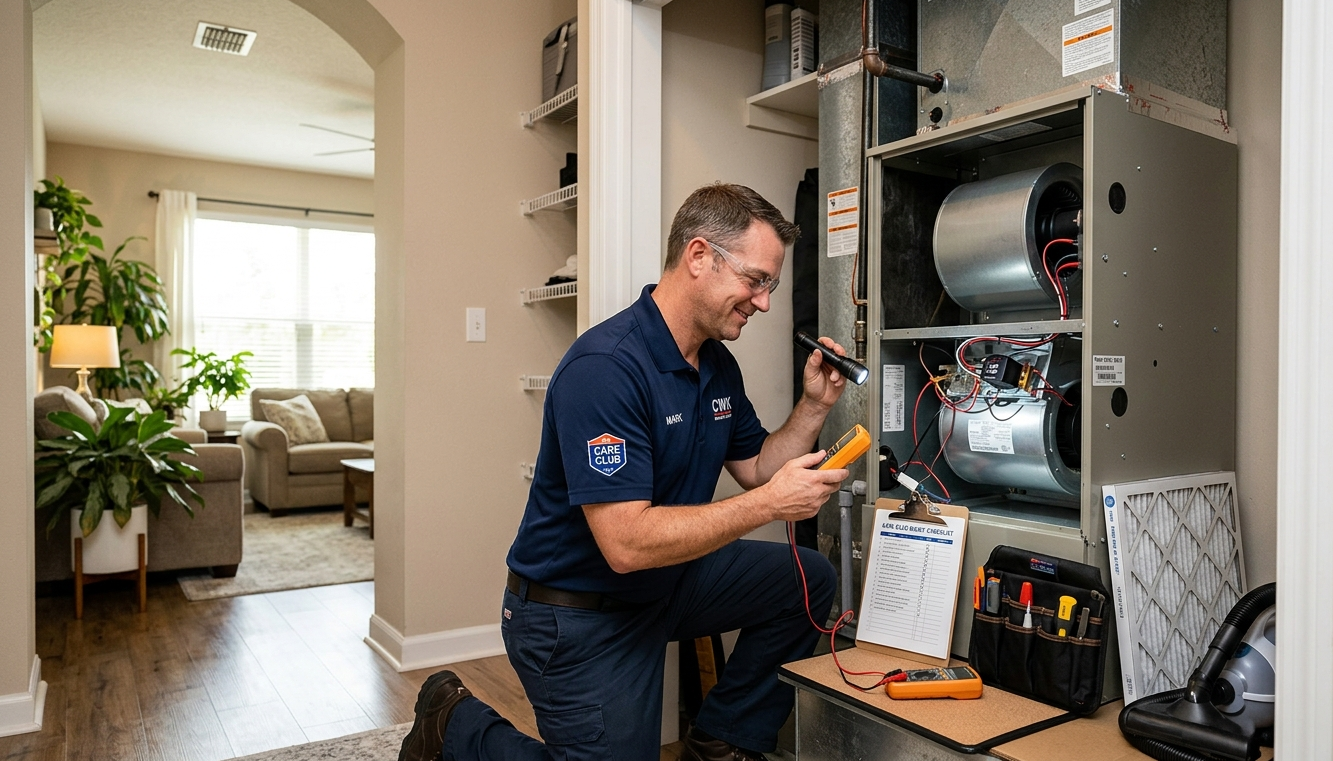
A comprehensive HVAC inspection covers every critical subsystem of your air conditioner and heat pump. Professional technicians evaluate electrical safety, refrigerant levels, airflow dynamics, and mechanical integrity.
Electrical Connections and Safety Controls
Technicians inspect all electrical connections, tightening loose wiring, testing capacitors, and measuring voltage and amperage draw on motors. Loose wiring or faulty capacitors can cause system shutdowns or burn out major components. Testing safety switches ensures your system shuts down properly in the event of a drain blockage or overheating issue.
Refrigerant Levels and Leak Detection
Proper refrigerant levels are critical for efficient heat transfer. Operating with low refrigerant forces the compressor to run longer and hotter, accelerating wear and reducing cooling performance. Technicians check operating pressures and inspect lines for potential leaks.
Coil Cleaning and Airflow Optimization
Evaporator and condenser coils must remain clean to facilitate heat exchange. When coils gather grime, heat transfer slows down dramatically. Cleaning the coils and inspecting the blower assembly restores optimal airflow throughout your ductwork, preventing hot and cold spots in your living spaces.
Condensate Drain Line Clearing
In humid climates, air conditioners extract gallons of moisture from indoor air daily. This condensation drains through a dedicated line that can easily grow algae, mold, or trap debris. Clearing and flushing the drain line prevents backups that cause indoor water leaks and property damage.
Financial and Operational Benefits of Regular Care
Investing in scheduled maintenance offers clear long-term returns for homeowners. Rather than treating maintenance as an optional expense, viewing it as protection for a major home asset yields distinct operational and financial benefits.
Extended Equipment Lifespan
An HVAC unit represents a significant financial investment. While the average system lasts between 10 to 15 years, well-maintained units regularly operate efficiently well beyond that mark. Regular lubrication of moving parts, routine calibration, and timely component replacements reduce mechanical strain and keep the entire system running smoothly.
Lower Monthly Energy Bills
When all mechanical and electrical parts operate at peak efficiency, your heating and cooling unit uses less electricity to achieve desired indoor temperatures. Studies indicate that routine maintenance can keep an HVAC system operating at up to 95 percent of its original factory efficiency.
Warranty Protection
Most modern HVAC manufacturers require proof of regular annual or semi-annual professional maintenance to keep factory warranties valid. If a major component fails under warranty but lacks maintenance documentation, manufacturers may deny parts claims, leaving homeowners responsible for the full cost of repairs.
Seasonal Transitions: Preparing Your System Year-Round
HVAC demand shifts dramatically between seasons. Preparing your equipment ahead of weather extremes prevents unexpected failures during peak summer heat waves or sudden winter cold snaps.
Spring AC Tune-Ups
Before summer temperatures climb, an air conditioning tune-up ensures the system is capable of handling heavy daily workloads. Technicians clean outdoor condenser coils, check refrigerant charges, inspect fan blades, and clear drain pans so your home stays cool without uninterrupted service interruptions.
Fall Heating Checks
Even in milder climates, heating systems require pre-season checks. Technicians test ignition systems, inspect heat exchangers for safety, test heat pumps, and verify that auxiliary heating elements fire correctly. These checks reduce fire hazards, ensure carbon monoxide safety, and optimize heating output.
Choosing the Right HVAC Protection Plan
While scheduling standalone service calls is an option, joining a dedicated service plan provides structural benefits, predictable scheduling, and financial savings. A comprehensive agreement ensures your system receives twice-yearly tune-ups without requiring you to remember to book them.
When evaluating maintenance programs, look for plans that offer comprehensive multi-point inspections, priority scheduling during peak seasonal surges, and discounts on parts and labor should repairs ever become necessary. Choosing a reliable, family-owned provider ensures personalized service, transparent pricing, and local expertise tailored to your area's climate challenges.
To ensure your heating and cooling system operates at peak performance, lower your monthly energy expenses, and secure exclusive savings on future service calls, consider joining the Krueger Care Club for complete home comfort protection. Securing a dedicated plan gives you peace of mind knowing certified technicians are monitoring your home’s climate equipment year-round.
Maintaining your indoor environment does not have to be complicated or stressful. By prioritizing routine inspections, changing filters regularly, and enrolling in an expert maintenance program, you protect your system against unexpected breakdowns while enjoying reliable, energy-efficient comfort in every season.