How Florida Humidity Damages Your AC System
Florida residents know the struggle: one minute, your home feels like an oasis, and the next, your air conditioner is laboring just to keep up with the sticky, oppressive air outside. High humidity is one of the biggest challenges for air conditioning systems in Florida. It not only affects how comfortable your home feels but also causes severe strain on your AC unit, leading to more repairs, higher energy bills, and a shorter system lifespan.
In this guide, we’ll break down how Florida’s humidity wrecks your AC, what warning signs to look out for, and how homeowners can protect their systems from long-term damage.
The Florida Humidity Problem
Florida’s climate is defined by its tropical and subtropical weather patterns. The combination of high temperatures and high relative humidity—often between 70% and 90%—creates a constant challenge for air conditioners. When humidity is high, the air holds more moisture, which makes it harder for your cooling system to do its job efficiently.
Humidity doesn’t just make the air feel warmer; it changes how heat is transferred and how your AC removes moisture. Your air conditioning system cools the air and dehumidifies it at the same time. However, when there’s excessive moisture, your AC must run longer cycles to maintain comfort levels, overworking its internal components.
How High Humidity Damages Your Air Conditioner
High humidity can deteriorate an AC system in several ways. Below are the most common effects that regular exposure to Florida’s moist air can cause.
1. Increased Wear and Tear on Components
When humidity levels are constantly high, your AC runs longer to pull both heat and moisture out of the air. Every additional minute of runtime adds to the wear and tear of key components such as the compressor, condenser coil, and evaporator coil.
Over time, this constant operation leads to:
Compressor burnout
Motor fatigue
Refrigerant leaks from over-pressured lines
Corrosion on electrical components
This type of stress can drastically shorten your AC’s lifespan, forcing homeowners to replace their systems earlier than expected.
2. Inefficient Cooling and Energy Use
In humid air, sweat doesn’t evaporate from your skin easily, which means you feel hotter even at lower temperatures. As a result, homeowners often lower the thermostat to feel comfortable.
That simple adjustment can cause a drastic spike in energy consumption. The AC unit works harder trying to cool air that’s already saturated with moisture. Because the system is removing less humidity with each cycle, it continues running longer—burning more electricity and lowering efficiency.
3. Coil Corrosion and Moisture Damage
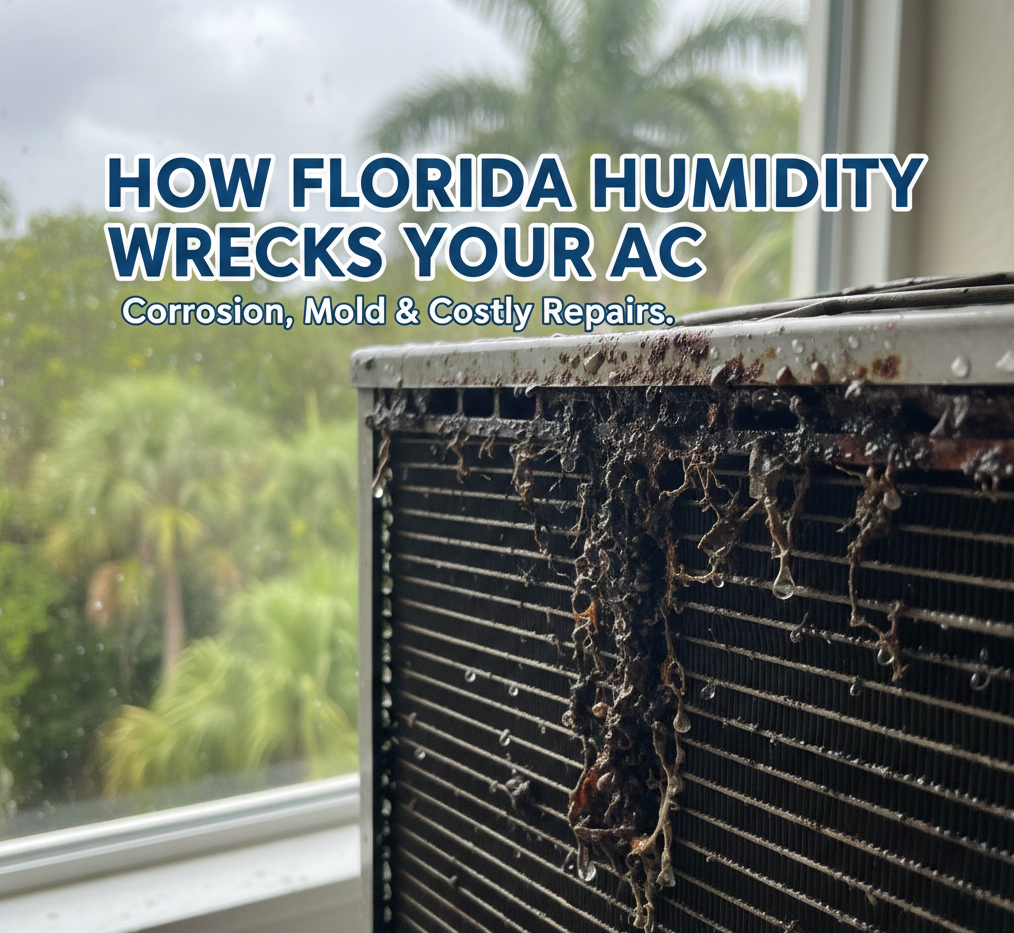
The combination of moisture and salt air commonly found in Florida’s coastal regions leads to coil corrosion. Both the evaporator coil (inside) and the condenser coil (outside) are vulnerable.
Over time, this corrosion reduces thermal conductivity—the ability of coils to absorb and release heat—causing your AC to lose efficiency. In severe cases, it can lead to refrigerant leaks and full coil replacement.
If you live near the coast or experience frequent storms, your system’s coils are under constant attack from humidity, salt, and microscopic debris.
4. Mold and Mildew Growth
With humidity comes condensation, and when water collects inside your AC—especially in the drain pan, ductwork, or coils—it creates a breeding ground for mold and mildew.
These microbes thrive in damp, dark environments. Not only does this affect the quality of the air inside your home, but it also leads to musty odors, clogs in drain lines, and potential respiratory issues. Mold can spread through the duct system, reducing indoor air quality (IAQ) and posing serious health risks.
5. Reduced System Lifespan
An AC system designed to last 12 to 15 years in moderate climates may last significantly less time in Florida’s humidity. The constant operational strain, moisture exposure, and corrosion lead to more breakdowns and degraded performance over time.
Without proactive maintenance and humidity management, Florida homeowners often face major repairs or full replacements far sooner than expected.
Signs Humidity Is Wrecking Your AC
Recognizing the early symptoms of humidity problems can save you from costly repairs. If you notice any of these warning signs, it’s likely your AC is battling excessive moisture:
The indoor air feels sticky or clammy, even when the AC is running.
There’s a musty or moldy smell coming from vents or the unit.
Your AC runs for long cycles but struggles to reach the set temperature.
There’s visible water dripping or pooling near the air handler or evaporator coil.
Your energy bills are steadily climbing despite normal usage.
Windows frequently fog or sweat from inside condensation.
Each of these symptoms indicates that your system isn’t dehumidifying the air effectively, a common struggle in Florida’s climate.
The Science of How AC Removes Humidity
To understand why high humidity wreaks havoc on Florida air conditioners, it helps to know how cooling systems handle moisture.
In a standard split system, warm indoor air passes over cold evaporator coils. As the air cools, moisture condenses on the coils and drains away through a condensate line. This is how your AC naturally dehumidifies the air.
However, when humidity levels rise dramatically, a few issues occur:
The coils can become saturated, limiting their ability to condense more water.
Airflow restrictions prevent adequate moisture removal.
Drain lines can become overwhelmed, causing water backup.
The system short cycles, preventing long enough operation to draw out humidity.
The result? Warm, moist indoor air and an air conditioner that works harder while performing worse.
Why Florida Is Especially Tough on AC Systems
Florida’s unique combination of heat, salt air, and consistent humidity creates the perfect storm for AC problems. The environment challenges nearly every part of the system—from the coils and fan motors to the electrical circuits and ducts.
Here’s why:
Prolonged cooling seasons: Unlike northern states, Florida AC systems run nearly year-round, giving them little downtime for recovery.
Salt air corrosion: Coastal homes experience accelerated metal corrosion due to salty, moist air.
Storm humidity surges: Summer storms bring sudden increases in outside moisture, overwhelming condensate systems.
Constant high humidity: Even evenings and winter months maintain comparatively high humidity levels of 60–80%.
All of this accelerates mechanical wear and encourages rust, corrosion, and microbial growth throughout the system.
How to Protect Your AC from Florida Humidity
Humidity is unavoidable in Florida, but there are several ways to minimize its destructive impact on your air conditioner and indoor air quality.
1. Install a Whole-Home Dehumidifier
Pairing your existing HVAC system with a whole-home dehumidifier is one of the most effective ways to control moisture. These systems work alongside your AC to extract excess humidity from the air before it circulates through your ductwork.
By maintaining optimal humidity levels (typically around 45–55%), you’ll reduce AC strain, improve comfort, and prevent mold growth.
2. Keep Up with Regular AC Maintenance
Routine maintenance is key to preventing humidity-related damage. Schedule professional tune-ups at least twice per year—ideally before and after Florida’s hot season.
Your HVAC technician should:
Clean coils and condensate pans.
Check and clear drain lines.
Inspect for corrosion or leaks.
Ensure correct refrigerant charge and thermostat calibration.
Measure indoor humidity levels.
A clean, well-tuned system runs more efficiently and dehumidifies more effectively.
3. Seal and Insulate Ductwork
Leaky ducts allow humid outside air to infiltrate, raising indoor humidity and forcing your system to work harder. Sealing, insulating, and balancing your ductwork can significantly reduce this problem.
This is especially critical in attics and crawlspaces, where moisture intrusion is common in Florida homes.
4. Use Variable-Speed or Inverter Technology
Modern variable-speed AC units and inverter-driven compressors excel in humid climates because they run at lower speeds for longer periods. This allows them to continuously remove moisture instead of cycling on and off abruptly.
If your existing system is nearing replacement, investing in a high-efficiency model designed for humidity control can save energy and reduce long-term wear.
5. Improve Home Ventilation
Humidity can linger inside if air circulation is poor. Use exhaust fans in kitchens and bathrooms, install vented attic fans, and consider energy recovery ventilators (ERVs) for better indoor air exchange.
Strategic airflow reduces moisture buildup and helps your AC operate under less stress.
6. Monitor Indoor Humidity Levels
A simple digital hygrometer can help you track your home’s relative humidity. Maintaining levels between 40–55% keeps your air comfortable without overloading your AC.
Anything consistently above 60% is a red flag that your AC or home ventilation needs attention.
Long-Term Benefits of Controlling Humidity
Keeping indoor moisture in check extends far beyond comfort—it directly affects your AC’s health, your home’s air quality, and your wallet.
Key benefits include:
Lower energy bills: Your AC won’t have to overcompensate for heavy air moisture.
Fewer repairs: Components last longer with less operational stress.
Better indoor air quality: Reduces mold, mildew, and allergens.
Longer AC lifespan: Systems properly maintained and dehumidified can last several years longer.
Improved comfort: Consistent, balanced humidity prevents clammy air and temperature swings.
Proper humidity management essentially gives your AC system room to breathe—literally and figuratively.
The Hidden Costs of Ignoring Humidity
Many homeowners notice that their energy bills are rising or rooms feel less comfortable but don’t realize humidity is the culprit. Ignoring this issue can lead to major long-term costs.
Excess humidity can cause:
Premature system failure: Compressor and coil damage can render systems beyond repair.
Structural damage: Persistent indoor moisture leads to warped wood, paint bubbling, or baseboard rot.
Health issues: Mold spores and high humidity can trigger asthma, allergies, and other respiratory problems.
Property devaluation: Mold and moisture damage lower home resale value and inspection scores.
Simply put, ignoring indoor humidity doesn’t just wreck your AC—it can slowly damage your home from the inside out.
Choosing the Right System for Florida Homes
When it’s time to replace your AC, homeowners in humid regions like Florida should prioritize features that tackle moisture effectively. Look for:
High SEER2 energy efficiency ratings (minimum of 15 in many Florida counties).
Two-stage or variable-speed compressors for steady humidity control.
Enhanced coil coatings to resist corrosion.
Smart thermostats and humidity sensors.
Integrated dehumidifier compatibility.
Local HVAC professionals familiar with humid climates can recommend systems tailored for Florida’s conditions, ensuring long-term reliability.
Final Thoughts
Florida’s humidity is more than just an inconvenience—it’s a constant mechanical challenge for your air conditioning system. High humidity strains every part of your AC, causing corrosion, inefficiency, mold growth, and premature failure. The secret to protecting your system lies in prevention: regular maintenance, high-quality equipment, and proactive humidity control.
By managing indoor moisture, you safeguard not only your comfort but also your investment. In a state where your AC works year-round, that’s the difference between constant repairs and consistent, reliable cooling.