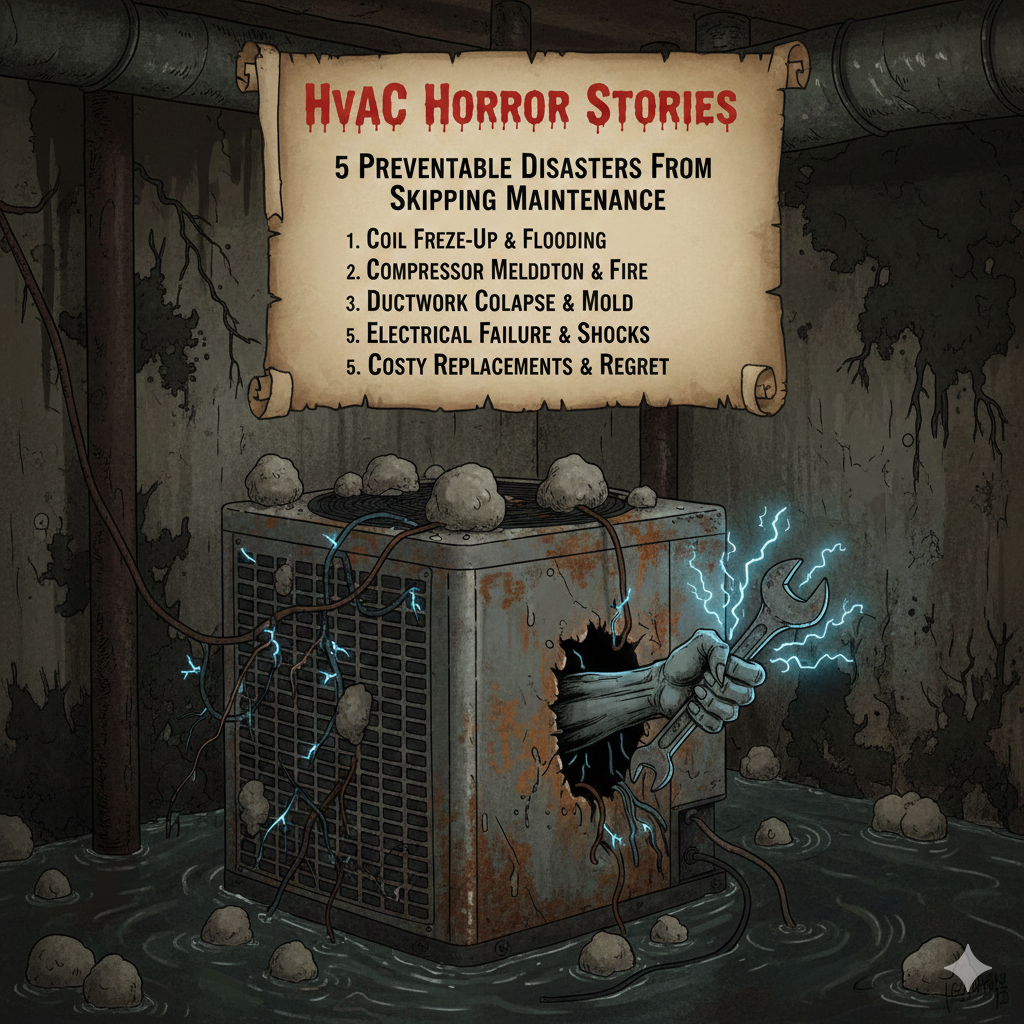
HVAC Horror Stories: 5 Preventable Disasters From Skipping Maintenance
HVAC maintenance is one of those chores homeowners put off until something breaks, usually on the hottest or coldest day of the year. Neglecting routine HVAC maintenance does more than cause discomfort; it can lead to expensive repairs, unsafe conditions, and system failure at the worst possible time. For Spring Hill, Florida homeowners, where heat and humidity push systems to their limits, skipping HVAC maintenance is a costly gamble.
Regular HVAC maintenance keeps your system running safely, reduces breakdowns, and helps control your energy bills. It also protects your investment by extending the life of your air conditioner, heat pump, or furnace. The horror stories below show what can happen when HVAC maintenance is ignored and how simple preventative steps can avoid these disasters.
Horror Story 1: The Heatwave Breakdown That Could Have Been Avoided
The first HVAC maintenance horror story starts with a familiar scene: a brutal Florida heatwave and an air conditioner that suddenly stops cooling. Inside the home, the temperature climbs quickly, the air feels sticky, and the thermostat never seems to reach its set point. When a technician finally arrives, the evaporator coil is frozen solid, the outdoor unit is filthy, and the air filter looks like it has not been changed in months.
Skipping basic HVAC maintenance tasks created a perfect storm. A clogged filter restricted airflow, the dirty outdoor coil could not release heat efficiently, and low refrigerant levels put extra strain on the compressor. All of this caused the system to run nonstop until it finally froze over and shut down. Instead of a modest maintenance visit, the homeowner now faces a costly repair and hours or days without cooling.
This kind of HVAC maintenance issue is almost completely preventable. Seasonal tune-ups catch airflow restrictions, dirty coils, and minor refrigerant issues before they become major breakdowns. Simple actions like changing filters regularly and scheduling HVAC maintenance before peak season can mean the difference between a quick adjustment and an emergency service call during a heatwave.
Horror Story 2: The Burned-Out Compressor and Four-Figure Repair
The second HVAC maintenance horror story involves the heart of the system: the compressor. A homeowner notices their system is running longer than usual, energy bills keep rising, and rooms are never quite comfortable. Instead of calling for HVAC maintenance, they postpone service for another season. Eventually, the system stops cooling entirely, and the diagnosis is grim: the compressor has failed and needs replacement.
Compressors rarely fail overnight without warning. Typically, overlooked HVAC maintenance issues build up over time. Low refrigerant from a small leak, dirty coils that cause high operating pressures, and restricted airflow can all force the compressor to work harder than designed. This relentless stress generates excess heat, accelerates wear, and ultimately leads to failure. By the time the homeowner calls a professional, what could have been a straightforward repair has turned into one of the most expensive components to replace in the entire system.
Consistent HVAC maintenance dramatically reduces the risk of compressor failure. Technicians check refrigerant levels, test electrical components, clean coils, and verify proper airflow. Finding small issues early protects the compressor and helps the entire system run within its intended operating range. For homeowners, that means fewer surprise breakdowns and far fewer four-figure repair bills.
Horror Story 3: The Hidden Mold and Indoor Air Quality Nightmare
Not all HVAC maintenance horror stories are obvious right away. In this scenario, the family begins to notice musty odors, lingering allergy symptoms, and occasional visible condensation around vents. Over time, dust buildup on supply grilles and dark streaks around vents become harder to ignore. When a thorough inspection is finally performed, mold is discovered in parts of the ductwork and near the air handler.
Neglected HVAC maintenance is often at the root of indoor air quality problems. When systems run with dirty filters, clogged drain lines, or restricted airflow, they cannot manage humidity correctly. High indoor humidity creates an ideal environment for mold growth in ducts, on coils, and around condensate pans. Poor filtration allows dust, dander, and other contaminants to circulate and collect on system components. Without regular HVAC maintenance to clean, clear, and inspect these areas, indoor air quality can quietly deteriorate.
Proactive HVAC maintenance helps protect the air your family breathes. Regular filter changes, coil cleaning, drain line flushing, and system inspections all work together to prevent moisture buildup and contamination. For homes in humid climates, scheduled HVAC maintenance is one of the most effective tools for maintaining good indoor air quality and avoiding mold-related cleanup and remediation.
Horror Story 4: Sky-High Energy Bills From a Neglected System
Another common HVAC maintenance horror story shows up in the form of painfully high energy bills. A homeowner notices their monthly utility costs climbing year over year, even though usage habits have not changed much. The system still turns on, so they assume everything is fine. Eventually, the sticker shock forces them to schedule a professional evaluation, and the findings reveal years of deferred HVAC maintenance.
Dirty coils, aging parts, worn belts, and clogged filters all make the system work harder to achieve the same level of comfort. An out-of-calibration thermostat or failing capacitor can cause short cycling, frequent starts, and inefficient operation. Over time, minor inefficiencies compound, and the system consumes far more energy than it should. Without regular HVAC maintenance, these issues often go unnoticed until costs become impossible to ignore.
Routine HVAC maintenance is one of the simplest ways to keep energy bills under control. When components are cleaned, lubricated, and tested regularly, systems operate closer to their original efficiency ratings. Homeowners benefit from more consistent comfort, fewer surprises on their utility statements, and a reduced environmental footprint. The modest cost of HVAC maintenance often pays for itself through energy savings alone.
Horror Story 5: The System That Died Years Too Soon
In this final HVAC maintenance horror story, the system does not fail dramatically in a single event. Instead, it slowly degrades over time and reaches the end of its life years ahead of schedule. The homeowner is frustrated because the equipment feels relatively “new,” yet they now face the major expense of full system replacement. A closer inspection of the service history reveals the truth: HVAC maintenance was sporadic at best.
Mechanical equipment is designed to operate within specific tolerances. When parts are not cleaned, adjusted, or replaced as part of regular HVAC maintenance, they wear more quickly. Excessive vibration, overheating, dirty motors, and imbalanced airflow all contribute to premature failure. A system that should have provided reliable comfort for 12–15 years may need replacement after 8–10 years if maintenance is repeatedly skipped.
Consistent HVAC maintenance extends system life and protects your investment. Annual or bi-annual tune-ups allow technicians to identify worn components, recommend proactive replacements, and keep everything operating smoothly. For homeowners, prioritizing HVAC maintenance means fewer emergency decisions, more predictable comfort, and maximum value from their equipment purchase.
What a Professional HVAC Maintenance Visit Should Include
A comprehensive HVAC maintenance visit is more than a quick look at the thermostat and a filter change. A well-structured HVAC maintenance checklist typically includes tasks such as inspecting and cleaning coils, checking refrigerant levels, testing capacitors and contactors, verifying electrical connections, and measuring temperature differentials across the system. Airflow is assessed, filters are inspected or replaced, and condensate drains are cleared to prevent water damage and mold growth.
A thorough HVAC maintenance service also includes system performance testing. Technicians may measure static pressure, confirm proper blower operation, and ensure that supply and return ducts are functioning correctly. For heat-producing equipment, safety checks on burners, heat exchangers, and flue pipes are critical. All of these steps work together to catch small problems before they turn into the kinds of HVAC maintenance horror stories described earlier.
How Often Should Homeowners Schedule HVAC Maintenance?
The ideal HVAC maintenance schedule depends on system type, usage, and local climate, but most homes benefit from at least one visit per year. In hot, humid regions where air conditioners or heat pumps run heavily for much of the year, a twice-yearly HVAC maintenance plan—once before cooling season and once before heating season—can be a smart choice. High-usage homes, larger families, or houses with pets and allergies may also require more frequent filter changes and inspections.
Sticking to a regular HVAC maintenance schedule provides peace of mind. Rather than waiting for something to break at the worst possible moment, homeowners can plan service visits at convenient times. This approach helps keep repair costs lower over the long term, ensures more reliable comfort, and reduces the risk of expensive emergency calls during peak seasons.
Final Thoughts: Turn Horror Stories Into Success Stories
Every horror story above traces back to the same root cause: skipped or inconsistent HVAC maintenance. The good news is that these outcomes are largely preventable. By treating HVAC maintenance as an essential part of homeownership rather than an optional extra, homeowners can avoid breakdowns, improve air quality, reduce energy usage, and extend system life.
For Spring Hill homeowners, where climate conditions put heavy demand on heating and cooling equipment, reliable HVAC maintenance is especially important. Scheduling regular tune-ups, changing filters on time, and addressing small issues quickly can transform potential disasters into minor adjustments. Instead of facing horror stories, homeowners can enjoy reliable comfort and predictable costs year after year.