
How to Protect Your Family From Allergens, Mold, and Humidity
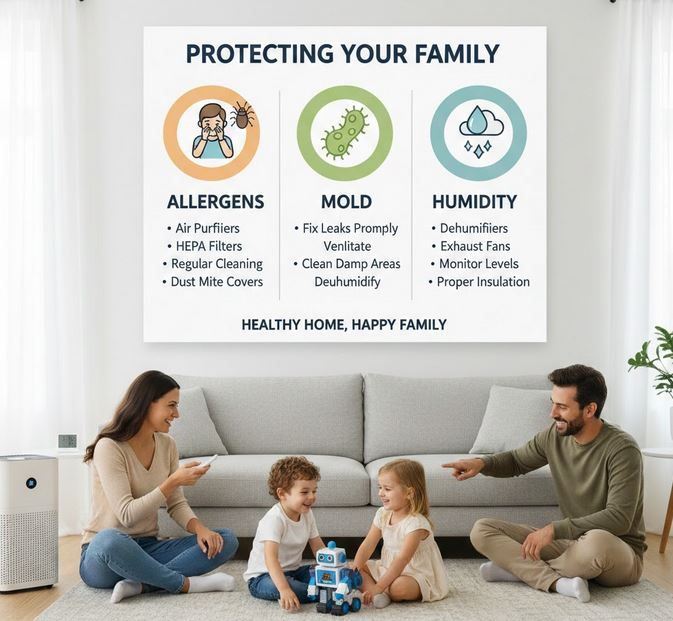
Indoor air can hold dust, pollen, mold spores, and moisture that quietly affect your family’s health day after day. This guide breaks it down into three simple areas from the chart: allergens, mold, and humidity so you know exactly what to do at home.
Allergens: Keep the Air You Breathe Cleaner
Allergens like dust, pollen, pet dander, and dust mites irritate noses, eyes, and lungs, especially for kids and anyone with asthma or allergies. Reducing what’s floating in your air and sitting on surfaces can make a huge difference in daily comfort.
Use air purifiers in key rooms. Choose a unit with a true HEPA filter for bedrooms and living areas so it can capture fine particles such as pollen and pet dander.
Upgrade to HEPA and better HVAC filters. A HEPA room filter plus a high‑quality furnace filter (appropriate for your system) helps trap particles before they circulate through the house.
Clean regularly and the right way. Vacuum with a HEPA‑equipped vacuum, damp‑dust instead of dry dusting, and wash bedding in hot water weekly to remove dust mites and their waste.
Add dust‑mite covers. Encasing mattresses and pillows in dust‑mite‑proof covers helps protect anyone who wakes up congested or stuffy in the morning.
Mold: Stop Moisture Problems Early
Mold grows wherever it finds moisture, warmth, and a food source like drywall, carpet, or wood. Besides smelling musty, mold can worsen allergies and respiratory issues, so it’s worth staying ahead of it.
Fix leaks promptly. Even a slow drip under a sink or near an A/C air handler can feed mold inside walls and floors; repair plumbing, roof, or window leaks as soon as you spot them.
Ventilate damp areas. Run bathroom and kitchen exhaust fans when showering or cooking, and let them run for at least 15–20 minutes afterward to remove steam and odors.
Clean damp areas regularly. Wipe condensation from windows, scrub visible mildew in showers, and keep basements and laundry rooms dry and uncluttered so you can see problems early.
Use dehumidification where needed. If a room feels damp or smells musty, a dehumidifier can pull excess moisture from the air and make it harder for mold to grow on surfaces.
Humidity: Find the Healthy Middle Ground
Too much humidity encourages mold, dust mites, and that sticky, uncomfortable feeling. Too little can dry out skin and nasal passages. The goal is a comfortable middle range all year.
Use dehumidifiers in moist rooms. Basements, bathrooms without windows, and laundry areas often need extra help; a portable or whole‑home dehumidifier can keep them in a safe range.
Run exhaust fans consistently. Every shower and cooking session should include the fan; this pushes moist, warm air outside instead of letting it linger in the house.
Monitor your humidity levels. A small digital hygrometer lets you see your indoor humidity so you can keep it roughly in the 35–50% range most families find comfortable.
Improve insulation and sealing. Proper insulation and air sealing around windows, doors, and attics helps prevent condensation, drafts, and temperature swings that contribute to humidity issues.
Bringing It All Together for a Healthier Home
Protecting your family from allergens, mold, and humidity is really about staying consistent with a few simple habits. Use good filtration, keep moisture under control, ventilate steamy areas, and fix small problems before they become big ones. With these steps in place, your home becomes a cleaner, more comfortable place to breathe and live every day.