How Your AC, Pool Heater, and Humidity Control Should Work Together
Why Your Home Systems Must Work Together
Your AC, pool heater, and humidity control equipment are all part of one comfort ecosystem, not separate luxuries. When they are set up and programmed to support one another, you enjoy better comfort, lower energy bills, and longer equipment life.
Modern comfort is no longer just about cold air inside and warm water outside. It is about synchronized systems that maintain stable temperature and balanced humidity throughout your home and around your pool area.
The Role Of Your AC In Whole‑Home Comfort
Your central AC does more than cool the air; it also removes moisture every time it runs. Properly sized and tuned equipment can keep indoor temperatures steady while preventing that sticky, clammy feeling common in humid climates.
If the system is oversized, it may short‑cycle, cooling the air quickly but not running long enough to pull out moisture. If it is undersized or poorly maintained, it can run constantly, drive up energy costs, and still leave some rooms uncomfortable.
How Pool Heaters Affect Energy Use And Comfort
Pool heaters change the thermal load around your home and yard, especially when the pool is close to the house or in an enclosed or partially enclosed area. Their run times and set temperatures influence both utility bills and perceived comfort outdoors.
When a pool heater is inefficient or poorly controlled, it can waste energy keeping water hotter than you actually use, or running during the most expensive utility periods. Matching heater type, size, and controls to your climate and swimming habits is critical.
Why Humidity Control Is The Missing Link
Dedicated humidity control—whether through whole‑home dehumidification, variable‑speed HVAC, or advanced thermostats—is what ties your comfort system together. It helps protect your home from mold and condensation while making moderate temperatures feel more comfortable.
When humidity is too high, air feels warmer than the thermostat reading. When it is too low, you may feel cooler and less comfortable even at a reasonable setting. Balanced humidity lets your AC and pool heater operate more efficiently without overcompensating.
How AC, Pool Heater, And Humidity Work As A System
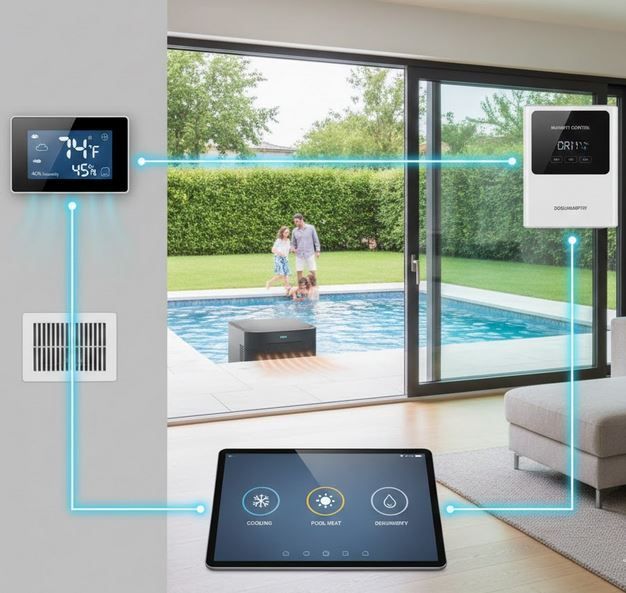
To design your comfort setup as a system instead of separate pieces, it helps to think about heat and moisture together. Your AC controls indoor temperature and removes moisture, your pool heater adds heat outdoors, and your humidity controls keep moisture levels in a safe, comfortable range.
When these elements are coordinated, they can reduce unnecessary run time, avoid competing setpoints, and keep both indoor and outdoor spaces feeling consistent. When they are not aligned, you may see higher bills, hot and cold spots, and more wear on equipment.
Ideal Temperature And Humidity Targets
For most homes in warm, humid regions, indoor temperatures in the mid‑70s and relative humidity around the middle of the recommended comfort range will feel comfortable for most families. Precise targets depend on your home’s insulation, sun exposure, and how you use your spaces.
Your pool water should be set at a temperature that matches your actual swimming habits, not just a high default setting. Keeping the water only a few degrees within your comfort range and avoiding wide day‑to‑day swings helps your heater work less.
Smart Thermostats And Automation: The “Brain” Of The System
Smart thermostats and pool controllers can act as the brain of your comfort system. When properly configured, they can:
Coordinate AC and dehumidification run times so you maintain comfort with less energy use.
Schedule pool heater operation around your typical swim times, not 24/7.
These controls allow you to create schedules, adjust setpoints remotely, and receive alerts if equipment is running longer than usual or not reaching targets.
Zoning And Room‑By‑Room Comfort
Zoning and room‑by‑room controls let you fine‑tune how your AC and humidity management systems treat different parts of your home. Spaces near the pool area, large glass doors, or west‑facing rooms may be harder to keep comfortable.
By adding zoning, dampers, or supplemental dehumidification where needed, you can relieve stress on the main AC system and maintain more even comfort throughout the home.
Preventing Common Problems When Systems Are Not Coordinated
When your AC, pool heater, and humidity control are not working together, several problems tend to appear:
Higher‑than‑expected energy bills, especially during peak season.
Musty odors, condensation on windows, or visible mold in problem areas.
Large temperature swings between rooms or between indoor and outdoor spaces.
Many of these issues can be improved by revisiting equipment sizing, setpoints, and how the different systems are scheduled and controlled.
Maintenance Habits That Keep Everything In Sync
Regular maintenance is what keeps all three components working as a team, not just individually:
Schedule AC tune‑ups before the hottest months and verify refrigerant charge, airflow, and drainage.
Service the pool heater as recommended by the manufacturer, including cleaning, scale removal, and inspection of heat exchangers.
Check and clean dehumidification equipment, condensate lines, and filters so moisture control stays consistent.
Simple steps—like changing filters on time and keeping outdoor units clear of debris—help your equipment operate at peak efficiency and last longer.
When To Call A Professional
A professional evaluation can identify whether your comfort issues come from sizing, ductwork, control settings, or aging equipment. Many homeowners assume they need a replacement when a combination of duct repairs, control adjustments, or humidity management may fix the problem.
If you notice rising bills, frequent short‑cycling, uneven temperatures, or persistent moisture problems, it is wise to schedule a complete comfort assessment that looks at AC, pool heating, and humidity together.