
7 Hidden HVAC Odors
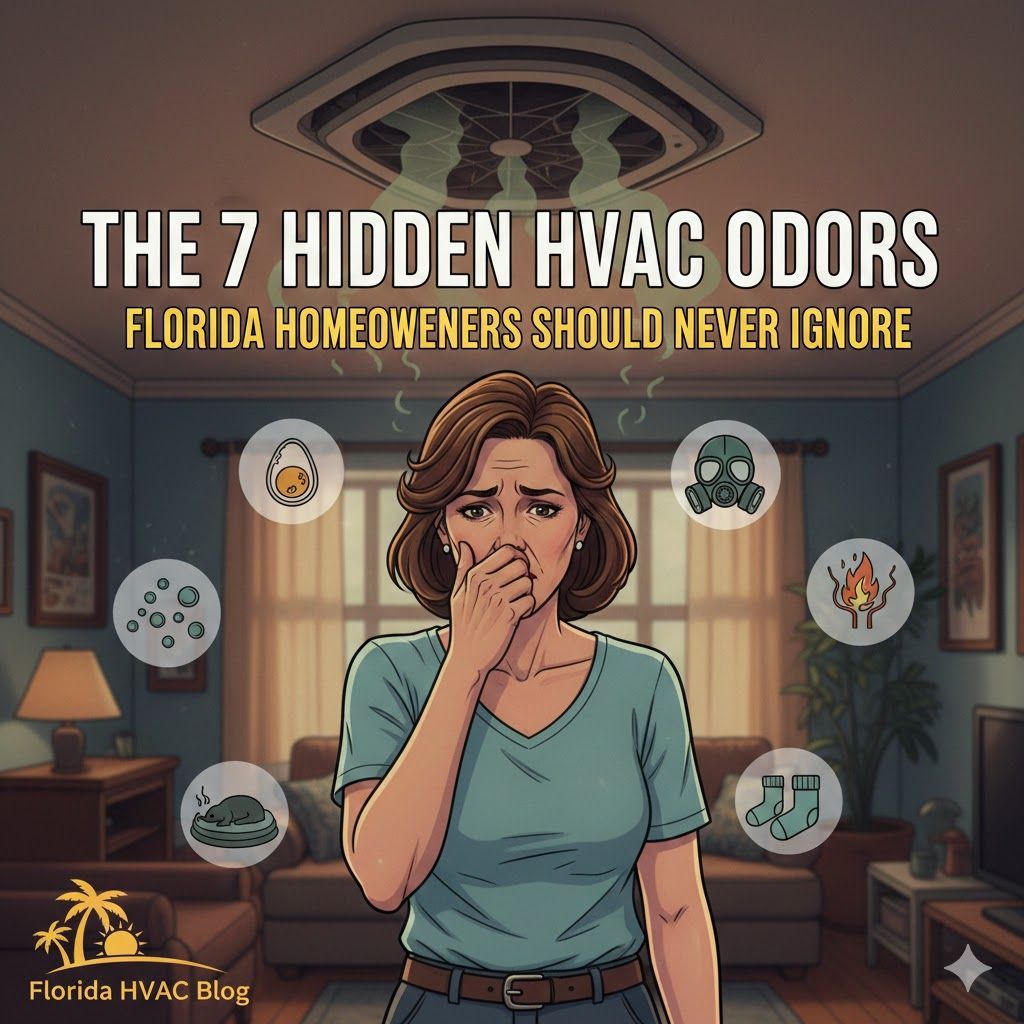
Florida's relentless humidity and heat put unique stress on HVAC systems, turning common odors into silent warnings of bigger problems. Ignoring these smells can lead to health risks, skyrocketing energy bills, and costly repairs. Homeowners in humid areas like Miami Beach must act fast to protect their indoor air quality and system longevity.
1. Musty, Moldy Smell
A damp, earthy odor blowing from vents signals mold or mildew growth inside the HVAC system. In Florida's subtropical climate, where indoor humidity often exceeds 60%, moisture collects on evaporator coils, drain pans, and filters, creating ideal conditions for microbial growth. This hidden issue reduces efficiency by up to 20% and circulates allergens that trigger respiratory problems, especially during peak summer months.
Dirty air filters trap moisture and dust, while clogged condensate drains cause backups that foster bacteria. Evaporator coils, constantly battling condensation, develop slime layers if not cleaned annually. Leaky ducts pull in humid attic air, worsening the cycle in unsealed systems common in older Florida homes.
Florida's building codes mandate proper condensate disposal to combat this, yet many systems installed pre-2010 lack modern safeguards. Homeowners notice it most when turning on the AC after rain or during humid nights.
2. Burning or Electrical Odor
A sharp, acrid smell like burning plastic or wires indicates overheating components or frayed electrical connections. South Florida's constant AC runtime strains blower motors, capacitors, and wiring, leading to insulation breakdown. This fire hazard escalates in attics where heat buildup exceeds 130°F.
Overworked systems from restricted airflow—often due to neglected filters—force motors to draw excess current, melting insulation. Dusty wiring in poorly ventilated units sparks intermittently. Turn off the system immediately if detected, as delays have caused thousands in fire damage claims.
Annual inspections catch loose terminals or failing relays before odors appear. In coastal areas, salt air accelerates corrosion on contacts, making this odor more prevalent.
3. Chemical or Refrigerant Leak
A sweet, ether-like or chlorine scent points to refrigerant escaping from coils or lines. Florida's high-pressure AC cycles stress brazed joints, especially in systems over 10 years old. Low refrigerant reduces cooling by 30%, spikes compressor workload, and poses health risks from inhaling fumes.
R-410A, common in modern units, smells faintly sweet; older R-22 has a sharper odor. Evaporator coil punctures from formicary corrosion—fueled by household chemicals and humidity—are frequent culprits. EPA regulations ban venting, so leaks demand certified repair to avoid fines.
Early detection via odor prevents total compressor failure, which costs $2,000-$4,000 to replace. Miami Beach's corrosive ocean air hastens line set degradation.
4. Rotten Egg or Sulfur Smell
This gas-like odor suggests hydrogen sulfide from bacterial growth in drain lines or sewer gas intrusion via cracked pans. Stagnant water in clogged drains breeds sulfate-reducing bacteria, amplified by Florida's mineral-rich groundwater. It mimics natural gas but originates internally.
Improperly sloped drain lines or missing P-traps allow backups. In slab homes, plumbing overlaps heighten risks. Health effects include nausea and eye irritation at low levels.
Flush drains monthly with vinegar; pros use biocides during tune-ups. Persistent smells warrant camera inspections to rule out sewer breaches.
5. Stale, Dusty Odor
A stale, attic-like smell arises from accumulated dust burning off on hot coils or pulling in unconditioned air through leaks. Florida homes' leaky ducts lose 20-30% efficiency, drawing contaminants from attics or crawlspaces. High pollen seasons coat components, releasing odors on startup.
Restricted airflow from blocked vents or dirty coils overheats elements. Newer variable-speed units mask issues longer, delaying detection.
Seal ducts with mastic; vacuum registers quarterly. This odor signals poor IAQ, linked to allergies in humid climates.
6. Mildew on Filters or Coils
Faint vinegar-like or yeasty smells come from damp filters or coil slime, distinct from full mustiness. High-MERV filters in humid homes retain moisture, fermenting debris. Evaporator fins, perpetually wet, host yeast if airflow stalls.
Pets, coastal pollen, and open windows accelerate buildup. It spreads unevenly, strongest near returns.
Replace filters every 30 days; UV lights kill microbes proactively. Neglect raises energy use 15% via coil icing.
7. Sweet Decay or Organic Rot
A fruity-rotten scent indicates dead animals or plant debris in ducts, common after storms. Florida's wildlife—rats, lizards, palmetto bugs—enters via gaps, decomposing in inaccessible spots. Hurricane season floods exacerbate rot in insulation.
Debris from construction or tree trimmings lodges during filter changes. Enzymes from breakdown irritate lungs.
Duct camera scoping locates sources; pros remove and sanitize. Prevent with mesh screens and annual cleanings.
Why Florida HVAC Odors Demand Urgent Action
Humidity above 70% statewide fuels rapid microbial growth, unlike drier regions. Systems run 3,000+ hours yearly, amplifying wear. Ignoring odors leads to $5,000+ repairs; mold remediation alone hits $3,000 in Miami-Dade.
Health impacts hit vulnerable groups hardest: kids, elderly, asthmatics face worsened symptoms from VOCs and spores. Energy waste from inefficiencies adds $200-500 to bills annually.
Prevention Checklist for Florida Homes
Monthly Tasks:
Inspect/replace filters (pleated, MERV 8-11).
Flush drains with 1:1 vinegar-water.
Clear vents of furniture/dust.
Quarterly Actions:
Test thermostat; check registers for even flow.
Monitor humidity (target 45-55% with dehumidifier).
Annual Pro Services:
Coil cleaning, duct sealing, refrigerant check.
UV installation for persistent moisture.
Long-Term Solutions Tailored to Florida
Upgrade to high-SEER units with built-in dehumidification; they handle 80% RH better. Smart thermostats alert via app for anomalies. Attic insulation (R-38 minimum) cuts heat gain 25%.
For Miami Beach properties, corrosion-resistant coils and elevated pads combat salt spray. Maintenance contracts save 15-20% on repairs through priority service.
Whole-home dehumidifiers pair perfectly with AC, dropping RH to 50% and slashing mold risks. Pair with air purifiers for VOC capture.
Real Florida Homeowner Stories
One Tampa resident ignored musty vents for months; mold spread to walls, costing $8,000 in remediation. A Cape Coral family smelled burning during a heatwave—frayed wires nearly sparked a fire, fixed for $450. Early action in Gainesville prevented a $3,500 compressor swap after chemical odors signaled a pinhole leak.
Call to Action: Schedule Your Inspection
Florida's HVAC works overtime—don't let HVAC odors signal breakdown. Contact a licensed tech for odor diagnostics today. Breathe easier, save money, and extend system life by 5-10 years.