Ultimate Guide to Attic Insulation & Duct Cleaning
When homeowners think about indoor comfort, their minds usually go straight to the thermostat. If the house feels too hot in the summer or chilly in the winter, the immediate reaction is to crank up the air conditioner or heater. However, your HVAC unit is only one part of a much larger, interconnected system.
If your home has poor attic insulation or dirty, leaking air ducts, your climate control system has to work twice as hard to keep you comfortable. Over time, this inefficiency leads to soaring energy bills, poor indoor air quality, and premature equipment failure.
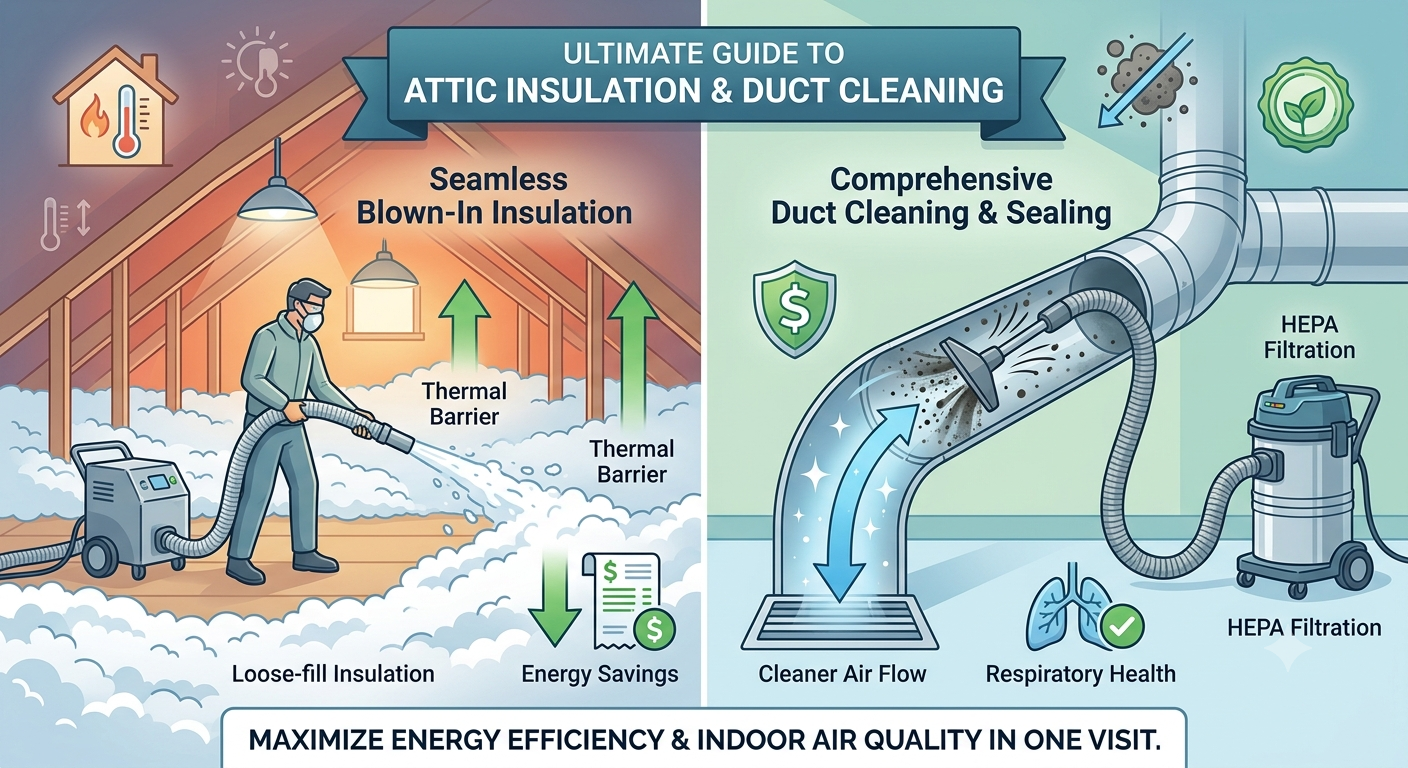
Optimizing your home’s energy efficiency and health requires a two-pronged approach: professional blown-in fiberglass or cellulose insulation and comprehensive air duct cleaning. Below, we dive into how these two vital services work hand-in-hand to transform your home’s comfort.
The Hidden Dynamic Between Your Attic and Your Air Ducts
Your attic and your air duct network share the same structural envelope. In a typical home, air ducts run directly through the attic space. During hot summer months, attic temperatures can easily exceed 140°F if not properly insulated and ventilated.
When your attic becomes a furnace, that intense heat radiates downward. If your air ducts have minor gaps or lack sufficient insulation themselves, the chilled air traveling through them warms up before it ever reaches your living room. Conversely, during the winter, precious heat escapes through the ceiling into a freezing attic.
By pairing blown-in attic insulation with professional air duct cleaning and sealing, you essentially build an impenetrable barrier against temperature fluctuations while ensuring the air circulating through your home remains pristine.
Understanding the Power of Blown-In Insulation
Older homes often rely on traditional fiberglass batts (the pink blankets rolled out between attic joists). Over time, these batts sag, degrade, and leave significant gaps around pipes, wiring, and light fixtures.
Blown-In insulation utilizes specialized pneumatic machines to distribute loose-fill fiberglass or cellulose evenly across your entire attic floor. This creates a seamless, monolithic thermal blanket that covers every nook, cranny, and hard-to-reach corner.
Key Benefits of Blown-In Attic Insulation:
- Higher R-Value per Inch: It packs tightly into voids, offering superior thermal resistance (R-value) compared to older, settling insulation blankets.
- Rapid Installation: Professional HVAC technicians can insulate an entire attic in a matter of hours with minimal disruption to your daily routine.
- Fire and Pest Resistance: Modern blown-in cellulose is treated with non-toxic boric acid, making it highly resistant to pests, mold, and flame spread.
Why Air Duct Cleaning is Crucial for Florida Homes
While insulation manages the temperature, your ductwork manages the delivery. Over the years, your HVAC system pulls in ambient dust, pet dander, pollen, fungal spores, and microscopic debris. This debris settles inside the duct network, forming a thick layer of contamination.
Every time your air conditioner kicks on, a portion of these particles is blasted back into your living spaces. For family members suffering from asthma, seasonal allergies, or upper respiratory sensitivities, dirty ducts can become a major health hazard.
Furthermore, excessive dust buildup inside the ducts restricts airflow. Your system has to pull more electricity to push air through a choked pipe, accelerating the wear and tear on your blower motor and compressor.
The Synergy: Why You Should Tackle Both At Once
Addressing insulation and ductwork at the same time delivers an immediate return on investment. Here is why combining these services makes sense:
- Eliminate Dusty Infiltration: When technicians install blown-in insulation, they are working extensively in your attic. If your ducts have undetected cracks, loose insulation material can occasionally migrate into the ductwork. Performing a thorough duct cleaning and sealing alongside an insulation upgrade ensures your air pathways remain perfectly sealed and clean.
- Maximize HVAC Lifespan: Upgraded insulation keeps the attic cool, and clean ducts maximize airflow. Together, they dramatically lower the runtime of your air conditioning unit, extending its operational lifespan by years.
- Drastic Utility Savings: According to the Department of Energy, heating and cooling account for over 50% of energy use in a typical home. Combining these two services can shave up to 20% to 30% off your monthly energy expenses.
What to Expect During a Professional Service Visit
A certified HVAC team follows a meticulous process to ensure your home is fully optimized:
- Inspection & Assessment: Technicians inspect the current R-value of your attic and use specialized cameras to look inside your ductwork, checking for mold, dust accumulation, and structural leaks.
- Negative Pressure Duct Cleaning: Using high-powered, HEPA-filtered vacuum systems and rotating brushes, technicians dislodge and extract all debris from your supply and return ducts without letting dust escape into your home.
- Blown-In Application: After sealing any open structural gaps around plumbing stacks or light fixtures, technicians blow in the fresh insulation to the recommended R-value depth appropriate for your climate zone.
Take Control of Your Indoor Comfort Today
Investing in your home’s thermal envelope is the single most effective step you can take toward lower utility bills and a healthier living environment. Don't let your hard-earned money slip away through an under-insulated attic or contaminated duct system.
If you are ready to eliminate hot zones in your home, lower your monthly power consumption, and breathe cleaner air, contact the local climate experts. Learn more about how we can optimize your home's thermal efficiency by scheduling an appointment for professional blown-in insulation and duct cleaning today. Our fully licensed technicians are ready to provide a custom evaluation tailored specifically to your home's layout and efficiency goals.