Premium HVAC Repair & Maintenance Services in Tampa Bay
A comfortable home or workplace relies heavily on a consistent, efficient heating, ventilation, and air conditioning (HVAC) system. In regions with intense seasonal changes, especially areas prone to extreme summer heat and humidity, a malfunctioning AC unit is more than just an inconvenience—it can quickly become an emergency.
To prevent unexpected breakdowns, minimize skyrocketing utility bills, and ensure high indoor air quality, proactive care is essential. Regular HVAC repair and maintenance are the dual pillars of a long-lasting, cost-effective comfort system. In this comprehensive guide, we explore why routine maintenance matters, how to identify early signs of system trouble, what to expect during a professional service visit, and how proper care saves you thousands of dollars over time.
Understanding the Difference: HVAC Repair vs. Routine Maintenance
Many homeowners confuse HVAC repair with HVAC maintenance, often waiting until their system breaks down before calling a technician. Understanding the distinction between these two services can save you time, stress, and money.
What is HVAC Maintenance?
HVAC maintenance is a scheduled, preventive service performed on an operational system. Think of it like changing the oil in your car. The primary goal is to optimize performance, clean internal components, verify safety controls, and catch minor wear-and-tear before it escalates into a catastrophic failure. Ideally, maintenance should be performed twice a year: once in the spring for your cooling system and once in the autumn for your heating system.
What is HVAC Repair?
HVAC repair is a reactive service required when a component has failed, or the system is no longer functioning correctly. This includes fixing a frozen evaporator coil, replacing a dead capacitor, repairing a refrigerant leak, or swapping out a faulty compressor. While repairs are inevitable over a system's lifespan, their frequency and severity can be dramatically reduced through consistent maintenance.
Top Signs Your Heating and Cooling System Needs Repair
While routine care minimizes risks, mechanical systems can still experience issues. Recognizing the early warning signs of HVAC trouble allows you to schedule a repair before the unit shuts down completely. Watch out for these common indicators:
- Weak or Restricted Airflow: If you notice little to no air blowing out of your vents, or if some rooms are significantly warmer than others, your system is struggling. This can be caused by a failing blower motor, clogged air filters, or blocked ductwork.
- Strange or Loud Noises: While no HVAC system is completely silent, rattling, buzzing, squealing, grinding, or banging noises are red flags. Screeching often indicates a belt issue, while grinding suggests worn-out motor bearings.
- Frequent Cycling: An air conditioner or furnace should run until it reaches the set temperature, turn off, and then cycle back on later. If your system turns on and off every few minutes, it is "short-cycling." This places immense strain on the compressor and wastes energy.
- Unexplained Spikes in Utility Bills: If your energy consumption jumps drastically without a change in usage habits, your system is likely working twice as hard to achieve the same output, signaling a drop in operational efficiency.
- Unpleasant Odors: Musty smells often point to mold or mildew growth within the ductwork or evaporator coils. A burning or metallic odor indicates overheating electrical components or wiring issues, requiring immediate attention.
- Persistent Moisture or Leaks: Pooling water around your indoor unit typically points to a blocked condensate drain line. If you notice a clear liquid leaking from the outdoor unit, it could be dangerous refrigerant, which requires certified professional handling.
The Massive Financial Benefits of Regular Maintenance
Investing in an annual or bi-annual HVAC maintenance plan yields a high return on investment. Here is how keeping your system tuned up saves you money:
1. Maximized Energy Efficiency
As an HVAC system operates, it accumulates dust, dirt, and grime on critical components like the coils and fan blades. This buildup forces the system to consume more electricity to pull in and condition air. Professional cleaning restores the system’s optimal efficiency, keeping your monthly energy bills as low as possible.
2. Extended Equipment Lifespan
An HVAC system is a major financial investment for any property owner. Standard units are designed to last between 10 to 15 years. However, a system left neglected will experience premature wear, potentially cutting its lifespan down to 7 or 8 years. Regular tune-ups ensure components run smoothly, adding years of reliable service to your equipment.
3. Prevention of Costly Emergency Repairs
During a routine maintenance inspection, a technician can spot a frayed belt, a rusting component, or a weak electrical capacitor. Replacing these affordable parts immediately prevents them from failing completely and damaging much larger, highly expensive components like the compressor or heat exchanger.
4. Protecting Your Warranty
Many manufacturers explicitly state in their warranty terms that the coverage is only valid if the system undergoes regular professional maintenance. If your system suffers a major failure but you cannot provide documented proof of annual service, the manufacturer may deny your warranty claim, leaving you to pay out of pocket.
What Happens During a Professional HVAC Tune-Up?
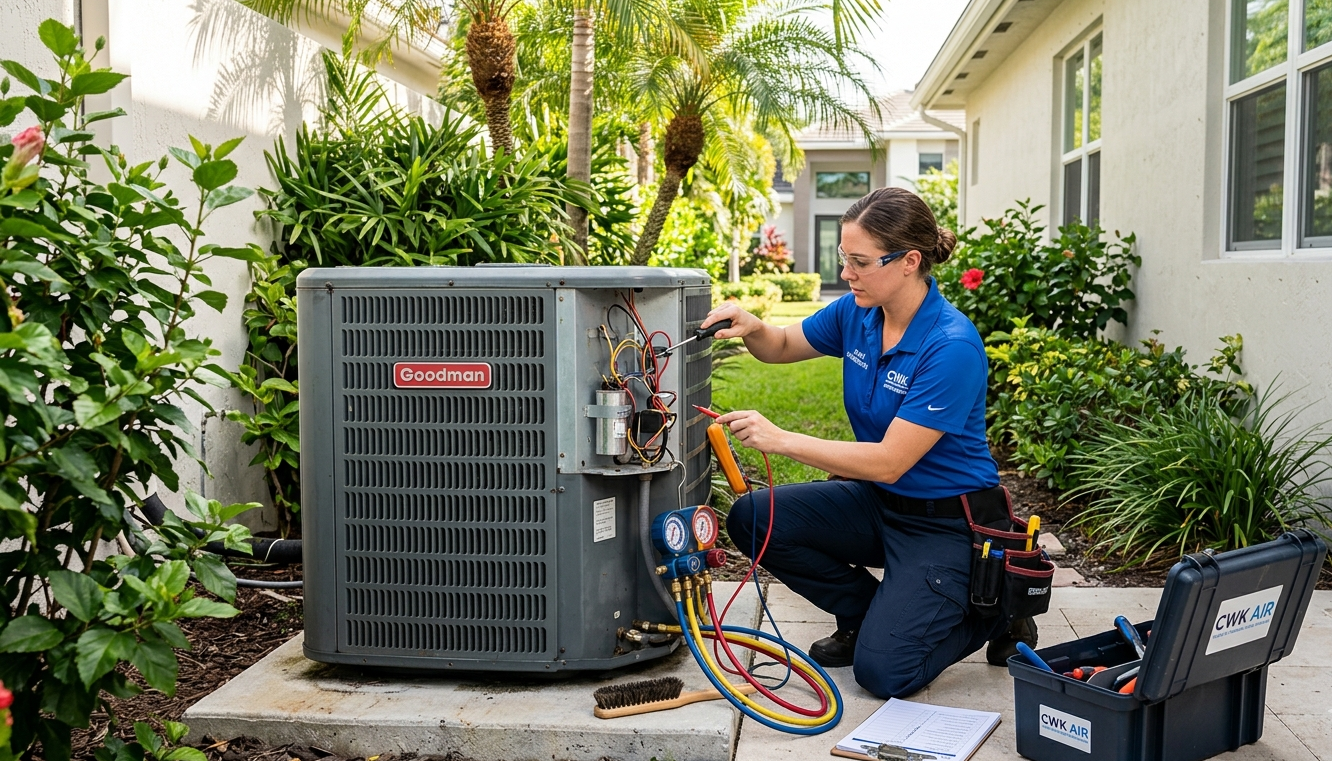
A thorough, professional maintenance checklist covers every critical system component. When an expert technician services your unit, their visit generally includes:
- Comprehensive Coil Cleaning: Dirt-coated evaporator and condenser coils reduce heat transfer capabilities, forcing the system to run longer. Cleaning them ensures efficient cooling.
- Electrical Inspection: Technicians tighten loose electrical connections and measure voltage and currents on motors to prevent electrical shorts and fire hazards.
- Refrigerant Level Check: Low refrigerant levels indicate a leak. Technicians check these levels to ensure optimal cooling performance and catch leaks early.
- Lubricating Moving Parts: Friction causes motors and fans to wear out quickly. Proper lubrication reduces resistance and saves energy.
- Condensate Drain Line Clearing: Algae, mold, and debris can clog the drain line, leading to water backups that cause water damage to your ceilings or floors. Clearing this line keeps water flowing outside safely.
- Thermostat Calibration: Ensuring your thermostat reads temperatures accurately prevents your system from overworking or under-cooling.
Choosing the Right Partner for Your Home's Climate Comfort
Your HVAC system is complex, relying on intricate electrical wiring, precise chemical balances, and heavy mechanical parts. Attempting DIY repairs or hiring uncertified individuals can lead to further damage, voided warranties, or safety hazards like carbon monoxide leaks and electrical fires.
When looking for a service provider, always prioritize licensed, insured, and certified technicians who possess local expertise. They understand how regional climate trends impact your equipment and can tailor their maintenance approach to handle high humidity, salt air, or intense heat.
Investing in proactive care is the single best way to secure uninterrupted indoor comfort all year round. Whether you need an urgent fix for a noisy system or want to schedule a comprehensive seasonal tune-up, relying on trusted professionals ensures the job is done safely and correctly. For reliable, top-tier system optimization and rapid diagnostic care, consider scheduling your next appointment for professional HVAC repair and maintenance to keep your home running smoothly through every season.