
Ultimate Guide to Heat Pump Conversions | CWK Air & Energy
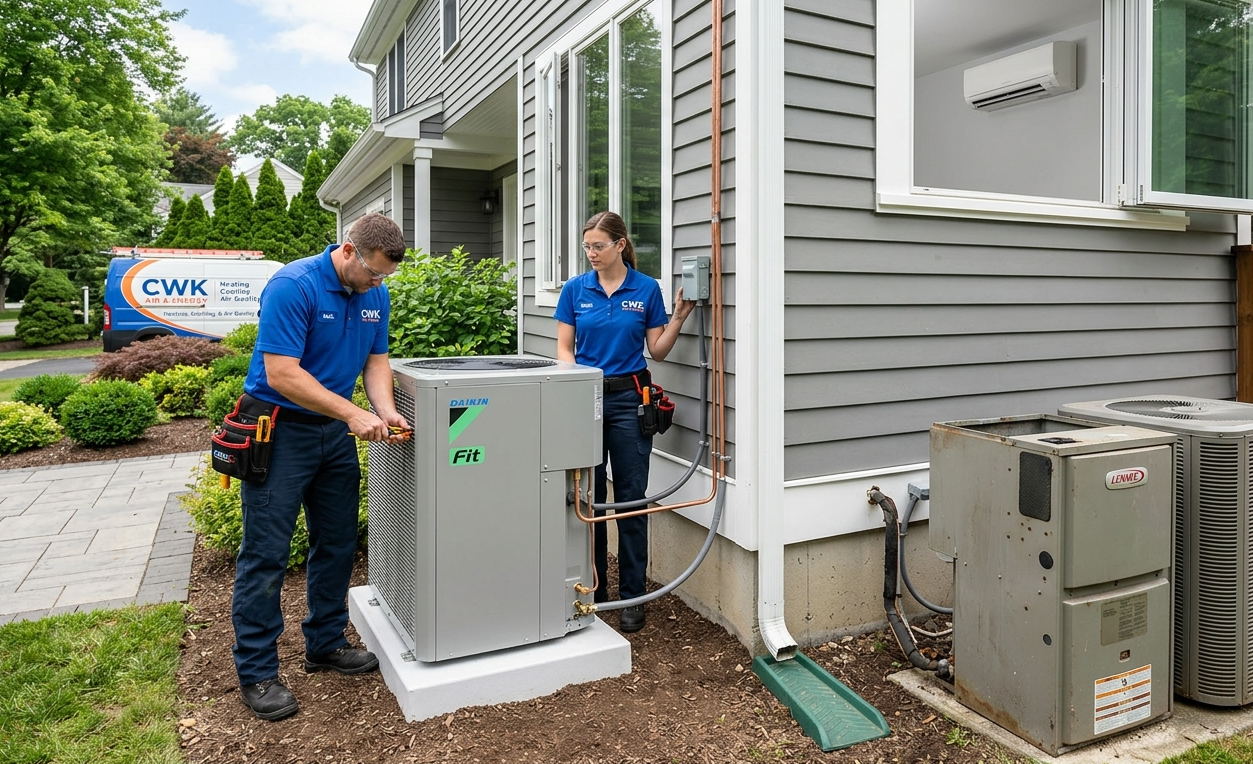
As a homeowner, your choice of heating, ventilation, and air conditioning (HVAC) system represents one of the single largest investments you will make in your property. For decades, traditional combustion furnaces and standard air conditioning units were the gold standard of comfort. However, the HVAC landscape has undergone a monumental shift. Rising energy costs, volatile fossil fuel prices, and a growing collective focus on sustainability have caused homeowners to rethink how they manage their indoor climate.
Enter the modern air-source heat pump. Once reserved primarily for milder, southern climates, recent leaps in inverter technology and cold-climate engineering have transformed heat pumps into the premier all-in-one comfort solution for homes across the globe.
If you are currently relying on an aging oil, propane, or natural gas furnace, or if your traditional central AC is reaching the end of its lifespan, a heat pump conversion is one of the smartest upgrades you can make. In this comprehensive guide, we will break down everything you need to know about transitioning your home to a high-efficiency heat pump system.
Understanding the Basics: What is a Heat Pump?
To understand why a heat pump conversion is so beneficial, it is essential to look at how these systems operate. Unlike traditional heating systems, which burn fuel (like oil or gas) or use electric resistance coils to create heat, a heat pump does not generate heat from scratch. Instead, it moves heat from one place to another.
The Magic of Reversible Refrigeration
A heat pump operates using a closed-loop refrigeration cycle, much like your kitchen refrigerator. It consists of an outdoor compressor unit and an indoor air handler connected by copper lines containing chemical refrigerant.
- In the Summer: The system acts exactly like a traditional air conditioner. It absorbs the ambient heat from inside your home and pumps it outdoors, leaving your indoor spaces cool and dehumidified.
- In the Winter: The system reverses its internal operation via a reversing valve. It extracts thermal energy from the outdoor air—yes, even when it feels freezing outside, there is still usable heat energy present—and transfers that warmth into your home.
Because moving heat requires significantly less electricity than creating it, heat pumps can achieve efficiency ratings well over 100%. In fact, many modern heat pumps can deliver up to three to four times more heat energy than the electrical energy they consume.
Traditional HVAC vs. Modern Heat Pumps: A Direct Comparison
When evaluating a heat pump conversion, it helps to weigh it directly against the systems you are likely familiar with.
1. Heat Pumps vs. Standard Central AC & Furnace Setup
The classic American HVAC setup features a split system: a gas or oil furnace tucked away in a basement or utility closet for winter heating, and a separate outdoor AC condenser unit for summer cooling.
- The Downside: You are paying for, maintaining, and eventually replacing two separate, complex pieces of machinery.
- The Heat Pump Advantage: A heat pump replaces both units with a single, streamlined system that handles year-round climate control seamlessly.
2. Heat Pumps vs. Fossil Fuel Furnaces (Gas, Oil, Propane)
Furnaces rely on combustion. Even the most efficient modern "95%+" AFUE gas furnaces lose at least 5% of their energy up the exhaust flue. Older systems can waste up to 30% or 40% of their fuel.
- The Downside: Combustion creates localized emissions, carries risks of carbon monoxide leaks, and ties your monthly utility budget directly to volatile fossil fuel markets.
- The Heat Pump Advantage: Heat pumps run purely on electricity. Because they move existing heat, their relative efficiency can hit 300% to 400%, dramatically lowering your home’s overall energy footprint.
3. Heat Pumps vs. Electric Baseboard Heating
Electric baseboard heaters use electric resistance to generate heat. While they are technically 100% efficient (converting 1 watt of electricity into 1 watt of heat), they are incredibly expensive to run because they require massive amounts of power.
- The Heat Pump Advantage: By switching from baseboards to a heat pump, homeowners routinely see their winter heating bills drop by 50% or more.
The Major Benefits of a Heat Pump Conversion
Deciding to convert your home’s heating and cooling architecture is a significant project. Understanding the multi-faceted advantages can clarify why so many property owners are making the switch.
1. Drastic Reductions in Energy Costs
For most households, the primary motivation for an HVAC upgrade is financial. Because heat pumps maximize every unit of electricity they consume, they drastically lower operational costs compared to oil, propane, or electric resistance heating. While the exact savings depend on your local utility rates and climate, the long-term return on investment (ROI) is substantial.
2. Enhanced Indoor Comfort and Consistency
Traditional furnaces operate on a harsh, cyclical "on-and-off" basis. They blast your home with hot air until the thermostat is satisfied, then shut off entirely, leading to noticeable temperature swings and cold drafts. Modern heat pumps utilize variable-speed inverter compressors. They run continuously at low, whisper-quiet speeds, adjusting their output precisely to match your home's real-time heating or cooling needs. This results in incredibly stable temperatures and superior humidity control during humid summer months.
3. Two-in-One Year-Round Versatility
Simplifying your home mechanical systems reduces overhead. With a heat pump, you have one manufacturer warranty to track, one filtration system to clean, and one annual preventative maintenance schedule to manage.
4. Unmatched Safety
Because heat pumps do not burn fossil fuels to generate warmth, they completely eliminate the indoor hazards associated with combustion. There is zero risk of gas leaks, oil line ruptures, or toxic carbon monoxide backup into your living spaces.
5. Slashing Your Carbon Footprint
According to environmental data, residential heating and cooling account for a massive percentage of a standard household's greenhouse gas emissions. Transitioning to an electric heat pump immediately eliminates localized fossil fuel burning. Furthermore, as local power grids increasingly integrate renewable energy sources like wind and solar, your heat pump automatically becomes even cleaner over time.
Navigating the Technical Aspects: Ductless vs. Ducted Conversions
When executing a heat pump conversion, an experienced HVAC contractor will analyze your home's architecture to determine which layout best suits your property: Ducted or Ductless.
Central Ducted Heat Pumps
If your home already features a robust framework of sheet-metal ductwork (perhaps from an existing central AC system or forced-air furnace), a centrally ducted heat pump is often the most straightforward choice. The new heat pump coil and air handler will seamlessly tie into your existing vents and registers, distributing conditioned air uniformly through every room.
Ductless Mini-Split Heat Pumps
If your home is currently heated via a boiler with baseboard radiators or radiant hydronic floors, you likely lack ductwork entirely. In the past, adding central air required tearing open walls to install bulky ducts. Ductless mini-split heat pumps eliminate this issue entirely.
An outdoor unit connects to one or more sleek, wall-mounted or ceiling-recessed indoor air handlers via a small three-inch conduit hole. This configuration allows you to create customized "zones" throughout your house. You can turn off conditioning in unused guest rooms while keeping your main living spaces perfectly comfortable, saving even more energy.
Crucial Considerations Before Making the Switch
While the benefits of a heat pump conversion are undeniable, a successful transition requires careful planning and professional oversight. Avoid the temptation to treat an HVAC change as a simple "plug-and-play" appliance swap.
Proper System Sizing is Non-Negotiable
An oversized heat pump will cycle on and off too quickly, wearing out components prematurely and failing to properly manage indoor humidity. Conversely, an undersized system will struggle to keep up on peak winter or summer days, forcing your backup heat to kick in more often than necessary. A qualified technician will always perform a comprehensive Manual J Load Calculation, evaluating your home’s square footage, wall insulation values, window types, and regional climate data to determine the precise tonnage required.
Evaluating the Electrical Panel
Because heat pumps run on electricity, upgrading from a gas or oil system may require more electrical capacity than your home currently provides. A standard heat pump conversion often necessitates a 200-amp electrical panel. Your contractor will inspect your breaker box early in the process to identify whether an electrical upgrade is needed.
Deciding on Backup Heat
In regions where temperatures routinely plunge well below freezing, you must decide whether to opt for a "dual-fuel" hybrid system or a standalone "cold-climate" heat pump.
- Hybrid Systems: Keep your existing gas or propane furnace in place to act as an auxiliary heat source on the absolute coldest days of the year, while the heat pump handles all cooling and mild-weather heating.
- Cold-Climate Heat Pumps: Utilize advanced flash-injection technology to maintain peak efficiency even when outdoor temperatures drop below -15°F, allowing you to cut the fossil fuel cord completely.
Maximizing Financial Incentives: Rebates and Tax Credits
One of the biggest roadblocks to any major home improvement project is the upfront cost. Fortunately, there has never been a better time financially to transition to a heat pump.
Government bodies and utility organizations are actively pushing for residential electrification. Under programs like the federal Inflation Reduction Act (IRA) in the United States, homeowners can qualify for significant tax credits—up to $2,000 or 30% of the total installation cost—for qualifying high-efficiency heat pumps. Additionally, many local state and electric utility companies offer direct, mail-in rebates worth thousands of dollars to lower initial equipment expenses. Be sure to ask your contractor for a localized breakdown of available financial incentives before signing a contract.
Step-by-Step: What to Expect During the Conversion Process
Transitioning to a modern heat pump system involves several distinct phases when working with a premier HVAC provider:
- The Home Assessment: A technician inspects your current system, measures your home, reviews structural insulation, and discusses your comfort pain points.
- Engineering and Design: The team performs load calculations, designs zoning layouts (if opting for ductless), checks electrical capacities, and provides a transparent quote outlining available rebates.
- Removal of Old Equipment: The team safely evacuates and recovers old refrigerants, removes old furnaces, boilers, or AC condensers, and disposes of them in compliance with environmental regulations.
- Installation and Integration: Technicians mount the outdoor condenser, position the indoor air handler, run the refrigerant lines, secure the electrical connections, and install a smart, programmable thermostat.
- Commissioning and Testing: The system is pressurized, vacuum-tested, and charged with refrigerant. Technicians verify airflow and run the system through full heating and cooling cycles to ensure perfect operational parameters.
Choosing the Right Partner for Your Transition
A heat pump conversion is a sophisticated structural upgrade that directly impacts your daily comfort and long-term financial expenditure. Choosing an experienced, certified HVAC professional ensures your equipment is designed correctly, installed safely, and calibrated to provide maximum energy efficiency for decades to come.
If you are ready to stop overpaying for volatile fossil fuels, eliminate the safety hazards of indoor combustion, and enjoy whisper-quiet, pinpoint climate control through every season, it is time to take the next step. To explore custom options tailored precisely to your budget and home layout, learn more about how you can schedule a professional consultation for your upcoming heat pump conversions and start saving today.