
Why Is My Pool Heater Not Heating? 5 Common Culprits
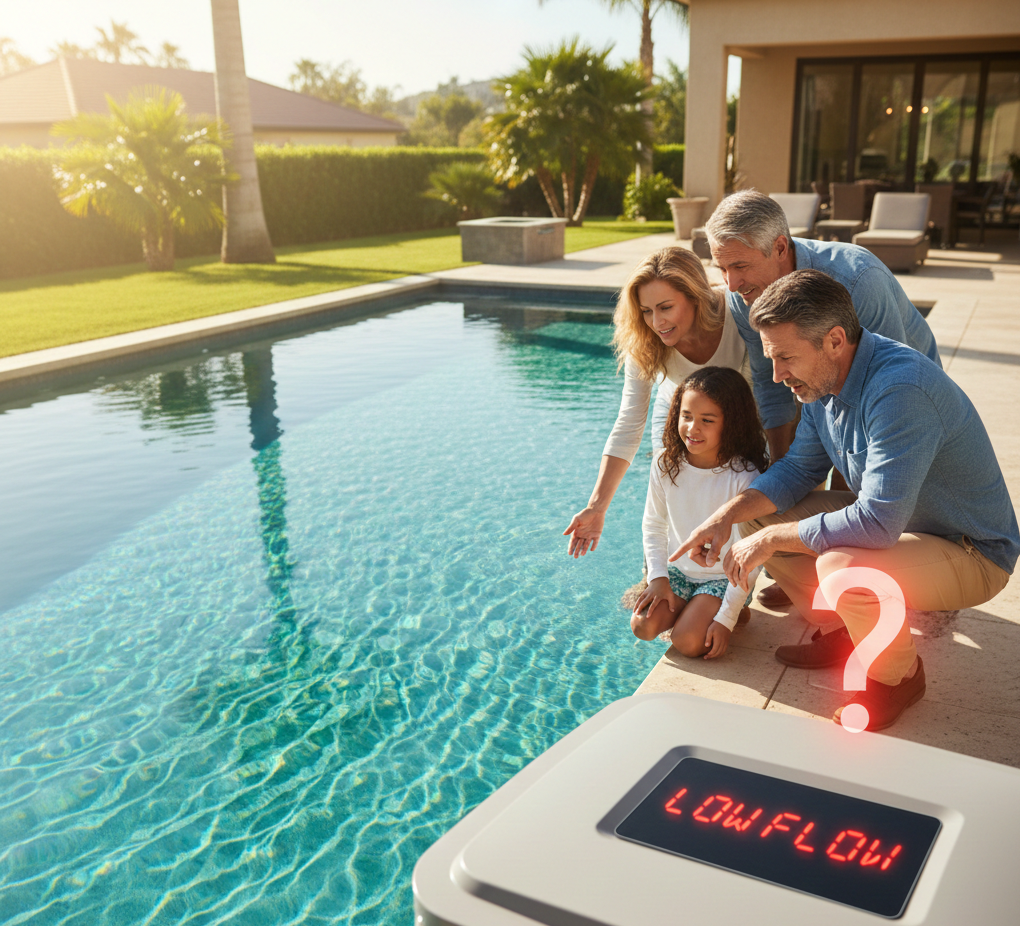
There is a specific kind of disappointment that only a pool owner knows: pulling back the cover on a Saturday morning, anticipating a spa-like soak, only to find the water is as chilly as a mountain spring. You check the settings, you hear a hum, but the temperature gauge refuses to budge.
When your pool heater stops doing its job, it doesn't just ruin your weekend plans; it can also be a source of anxiety. Is it a simple fix, or are you looking at a multi-thousand-dollar replacement? The good news is that many pool heater issues are caused by external factors rather than a total internal meltdown.
In this comprehensive guide, we will break down the five most common culprits behind a heater that won't heat, plus how to troubleshoot them like a pro.
1. Low Water Flow: The Pressure Switch Problem
Your pool heater is a sophisticated piece of machinery, but it has a very simple survival instinct: it will not fire up if there isn't enough water moving through it. This is a safety feature designed to prevent the internal heat exchanger from melting or exploding due to trapped heat.
Most heaters use a pressure switch to detect water flow. If the flow is too weak, the switch stays open, and the heater stays off.
Common causes of low flow:
A Dirty Filter: This is the #1 cause. If your sand, DE, or cartridge filter is clogged with debris, the water pressure drops significantly.
Clogged Skimmer or Pump Baskets: If your baskets are full of leaves, the pump can’t pull enough water to satisfy the heater.
Closed Valves: Ensure that the bypass valves are set correctly. If too much water is bypassing the heater, the pressure switch won't engage.
The Fix: Start by backwashing your filter or cleaning your cartridges. If the heater kicks on immediately after a filter cleaning, you’ve found your culprit.
2. Thermostat and Sensor Calibration Issues
Sometimes the heater is physically capable of heating, but its "brain" is telling it not to. The thermostat is responsible for monitoring the current water temperature and comparing it to your desired setting.
The "Ghost" Temperature
If your thermostat is faulty or out of calibration, it might think the water is 85∘F when it’s actually 72∘F. In this case, the heater won't ignite because it believes the job is already done.
Sensors and High-Limits
Most modern heaters have "High-Limit" switches. These are safety sensors that shut the unit down if they detect the internal temperature is getting dangerously high. If these sensors fail or become corroded, they might "trip" prematurely, cutting off the heating cycle before the pool is warm.
The Fix Check: Look at the digital display. Is it showing an "S" or "SEN" error code? This usually points directly to a sensor failure.
3. Gas Supply and Ignition Problems (For Gas Heaters)
If you have a gas heater, it requires a precise mixture of fuel, air, and a spark to create heat. If any part of that "fire triangle" is missing, you'll have a cold pool.
The Pilot Light or Igniter
Older heaters use a standing pilot light (a small flame that stays lit). If this blows out due to wind or a faulty thermocouple, the heater won't start. Newer models use an Electronic Ignition (HSI). You should hear a clicking sound or see a glow when the heater tries to start. If it clicks but never roars to life, the igniter may be burnt out.
Gas Pressure Issues
This is common during the first cold snap of the year. If your gas line is too small, or if the regulator on your propane tank is freezing up, the heater won't get enough "juice" to stay lit. It might start for a few seconds and then flame out.
The Fix: Ensure your gas valves are fully open. If you use propane, check your tank levels! It sounds simple, but a 10% tank often doesn't have enough pressure to run a high-BTU pool heater.
4. The Heat Pump’s Greatest Enemy: Outside Temperature
If you own a Pool Heat Pump rather than a gas heater, you are playing a different game. Heat pumps don't generate heat; they transfer it from the outside air into the water.
The 50∘F Rule
Most heat pumps struggle to operate when the ambient air temperature drops below 50∘F to 55∘F. If it’s a chilly morning, there simply isn't enough heat in the air for the refrigerant to extract. The unit might run, but it will be blowing cold air and doing very little for your water temperature.
Evaporator Coil Frost
On humid, cool days, the evaporator coils on your heat pump can actually freeze over, turning the unit into a block of ice. Most modern units have a defrost cycle, but if the ice persists, the heater will shut down to protect the compressor.
The Fix: If it’s too cold outside, you simply have to wait for the sun to come out. Heat pumps are "marathon runners," not "sprinters"—they work best during the day when the air is warmest.
5. Pest Damage and Corroded Wiring
You aren't the only one who likes a warm, sheltered spot. During the off-season, mice, spiders, and even snakes often decide that the inside of your pool heater is the perfect winter home.
Chewed Wires
Rodents love to chew on the colorful wires inside a heater's control panel. A single severed wire to the flame sensor or the transformer will render the entire unit useless.
Spider Webs in the Orifice
Spiders are attracted to the smell of mercaptan (the chemical added to gas). They often spin webs inside the "burner orifices." These tiny webs can block the flow of gas, preventing a clean ignition or causing "sooting," which can damage the heat exchanger.
The Fix: Periodically open the access panel (with the power OFF) and inspect for nests or chewed wires. If you see signs of "occupants," it’s time to call a professional to deep-clean the burner tray.
When to Call the Professionals
While checking your filter baskets or flipping a circuit breaker is an easy DIY task, pool heaters involve high-voltage electricity and volatile gases. You should contact a professional service if:
- You smell gas: This is an immediate safety concern. Turn off the gas supply and call a pro.
- The heater is making a "banging" or "whistling" sound: This could indicate a scaled-up heat exchanger or an internal blockage.
- You see leaking water: Water dripping from the bottom of the heater usually means the internal copper heat exchanger has cracked, often due to poor winterization or chemical imbalance.
- Error codes persist: If you’ve cleaned the filter and the "Low Flow" light stays on, you may have a faulty internal pressure switch.
Summary Checklist for Homeowners
Keep Your Swim Season Going
Your pool is a major investment, and the heater is the key to enjoying that investment for more than just two months a year. By performing regular maintenance—like cleaning your filters and checking for pests—you can prevent most of these "culprits" from stealing your warm water.